





After $25 billion of spending, 39 days of fighting, and about that much time on ceasefire, the Iran war is currently on pause. For participants willing (the United States, Israel, and Iran) and unwilling alike (the other Gulf nations), it’s now time to pause, take stock, and… restock.
The Gulf nation of Qatar suffered much during the short-lived war. Home to the Al Udeid Air Base, America’s largest military base in the Middle East, Qatar became a prime target for Iranian attacks during the war. Qatar suffered an estimated 700 Iranian drone and missile strikes that damaged liquefied natural gas facilities to such an extent that it may take five years to bring them back online, at a cost of $20 billion in revenue lost annually.
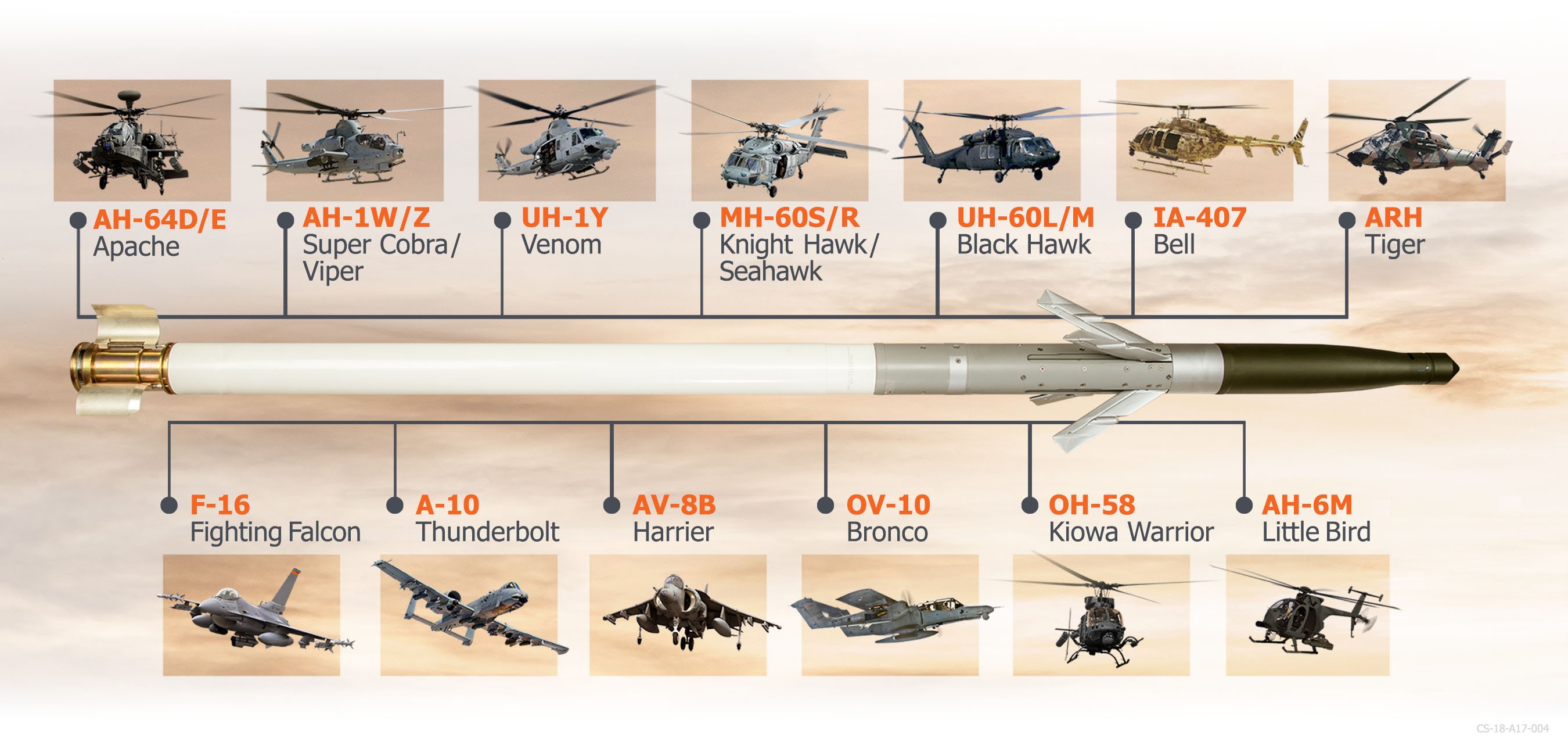
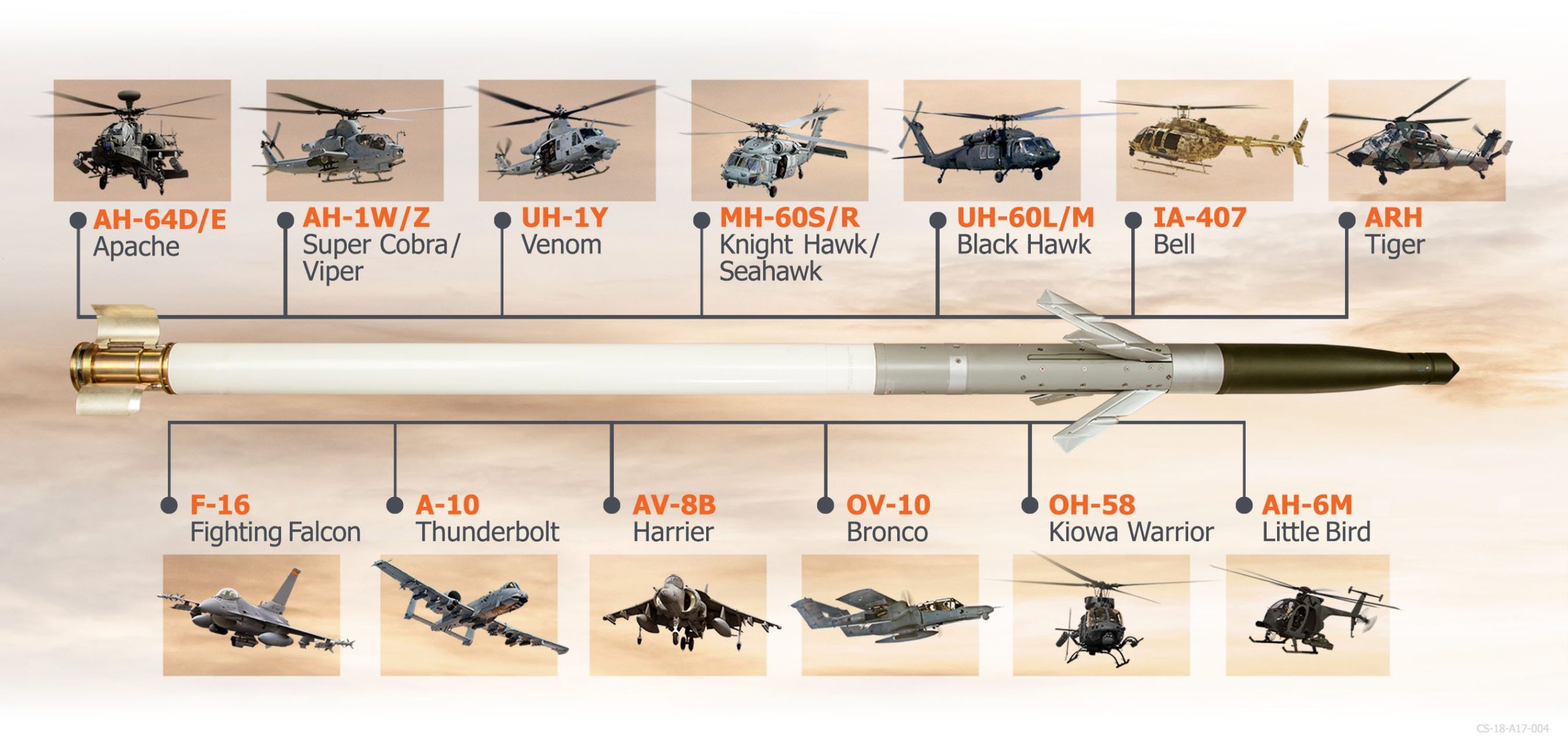
Image source: BAE Systems.
Qatar needs 10,000 rockets
Should the war resume, Qatar wants to be better prepared to defend itself next time — and so it’s turning to the U.S. government and defense contractor BAE Systems (BAESY 4.69%) for assistance. According to a recent U.S. State Department notification to Congress, the Qatari government has requested permission to purchase 10,000 Advanced Precision Kill Weapon System-II (APKWS) rockets for $992.4 million.
Originally designed as an air-to-surface missile, fired from platforms such as the Apache attack helicopter at ground targets, the APKWS is basically an unguided 70 mm Hydra rocket equipped with a laser guidance system to improve accuracy. But once this modification was made, militaries discovered something amazing:APKWS can shoot down drones midair. (Indeed, in at least one instance, it’s succeeded in shooting down a cruise missile.)
This fact was proved in practice last year in Ukraine, in a pilot project run by both BAE Systems and its partner, L3Harris (LHX 1.38%), which equipped pickup trucks with L3’s Vehicle-Agnostic Modular Palletized ISR Rocket Equipment (VAMPIRE) launcher. Used to defend Ukrainian cities from attacks by Shahed-136 drones, built by Russia on license from Iran, the VAMPIRE-plus-APKWS system proved remarkably effective in shooting down drones.
New footage of a Ukrainian laser-guided APKWS rocket slamming into a Russian Shahed-136 attack drone, sending it spiraling toward the ground.
The low-cost rocket was fired and guided in by an L3Harris Vampire SAM system. pic.twitter.com/9rKEafTz9x
— OSINTtechnical (@Osinttechnical) April 30, 2025
Even better, it proved remarkably cheap.
All of a sudden, instead of firing $3 million Patriot missiles at $50,000 Iranian drones, Ukraine was able to shoot those same drones with $22,000 rockets — flipping the economics of defense versus offense entirely upside down.
What do investors need to know?
Given the thousands of drones Iran launched during the war, the thousands of drones it’s believed still to possess, and the continuing risk that the war may resume, the State Department has concluded that “an emergency exists that requires the immediate sale to Qatar of the above defense articles and defense services is in the national security interests of the United States.”
The sale is therefore almost certain to go through.

Today’s Change
(-4.69%) $-4.85
Current Price
$98.54
Key Data Points
Market Cap
$72B
Day’s Range
$98.49 – $100.67
52wk Range
$84.50 – $126.00
Volume
530K
Avg Vol
302K
Gross Margin
8.82%
Dividend Yield
1.96%
As the principal contractor on this arms deal, BAE Systems will reap essentially all the rewards from Qatar’s purchase. What’s more, because APKWS comes out of BAE’s most profitable business unit, Electronic Systems, this deal is likely to generate extraordinary profits for BAE (a 15.5% operating profit margin, according to data from S&P Global Market Intelligence) — the more so because supply is likely to be constrained, resulting in higher prices.
Actually, that’s possibly the most important point of all. According to BAE’s own website, the company currently has a capacity to produce only 25,000 APKWS per year. If delivered all in one year, as you’d expect in an “emergency” situation, Qatar’s order will eat up almost half of that. And in a situation like this, you’d expect prices to rise — for example, to $992.4 million divided by 10,000 rockets, equaling a $99,000 unit price!
It’s a seller’s market for BAE Systems right now, and it will remain so until the company can expand its production capacity. Expect BAE’s profit margins to reflect that.