








The upcoming SpaceX initial public offering (IPO) isn’t going unnoticed by Tesla (TSLA 1.40%), as there’s natural speculation that Elon Musk (CEO of both companies) might seek to merge the two. A merger would bring some benefits for Tesla, but on balance, I don’t think it would be good news for Tesla investors. Here’s why.
The benefits of a Tesla and SpaceX merger
The two companies already collaborate on engineering matters and are part of the Terafab joint venture to build a semiconductor manufacturing plant. Terafab looms large in the discussion because Musk outlined that Tesla would build the research fabrication plant, with SpaceX taking “care of like the initial phase of the scaled-up Terafab.”
However, beyond that, it’s a complex situation that requires both sets of shareholders to be satisfied. A merger would resolve the issue. Terafab will secure Tesla’s and SpaceX’s supply chains and reduce reliance on Asian foundries for chips used in Tesla electric vehicles (EVs) and Optimus, as well as SpaceX’s orbital artificial intelligence (AI) and xAI.
In addition, joining with SpaceX would arguably improve Tesla’s ability to fund future investments, as the combined company might have better access to funding.

Today’s Change
(-1.40%) $-6.20
Current Price
$435.90
Key Data Points
Market Cap
$1.6T
Day’s Range
$428.19 – $441.06
52wk Range
$273.21 – $498.83
Volume
2.6M
Avg Vol
60.8M
Gross Margin
19.07%
Why a merger is not in Tesla shareholders’ best interest
There are three key arguments against a merger.
First, merging runs counter to the current trend in the industrial sector, where many large companies, such as the former General Electric, Honeywell, the former United Technologies, and Siemens, have split up. Investors have preferred investing in focused companies that serve specific markets and manage their own finances.
Second, investors in Tesla own the stock because they believe the company is laying the foundation for a massive ramp-up in recurring revenue from robotaxis, Optimus robots, energy and storage, and growth in full self-driving (FSD) software, in addition to EV sales. In this view, crystallizing a valuation now by swapping shares with SpaceX would be a mistake, as it could dilute Tesla shareholders precisely as the company is about to release value from the initiatives discussed above.
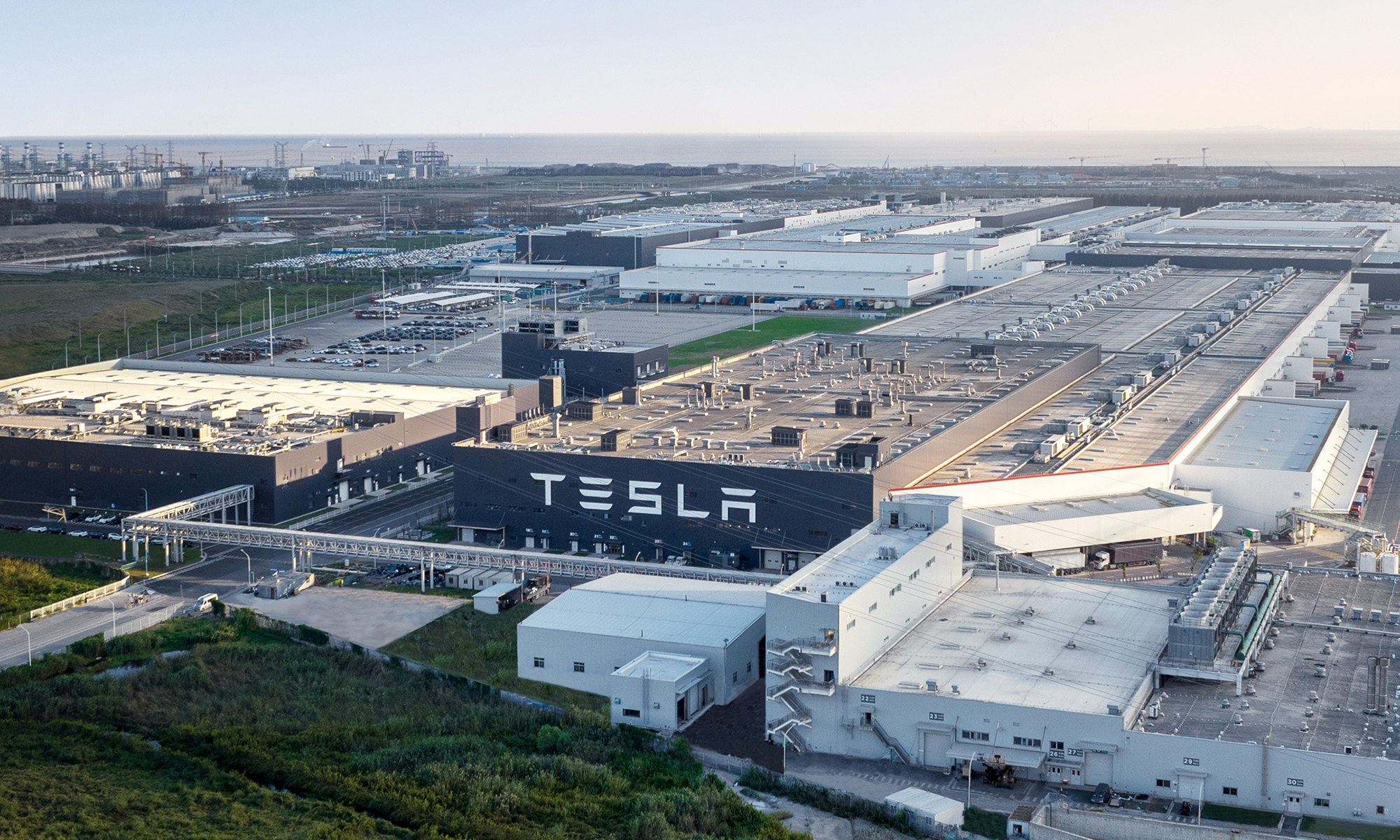
Image source: Tesla.
Third, along similar lines, there’s no need for Tesla to rely on a SpaceX merger to fund future investments, as it can easily finance them through robotaxi income in due course. In fact, a merger with SpaceX would tie Tesla shareholders to SpaceX’s massive capital investments.
What’s next for Tesla in 2026
The SpaceX IPO is exciting in itself, and the idea of a merger will undoubtedly attract some Tesla investors who also believe in SpaceX’s long-term prospects. However, for most Tesla investors, who are waiting for the robotaxi rollout to scale in 2027 and for the commercial production of Optimus and the Tesla Semi truck to start in 2026 and ramp up in 2027, now is not the time to dilute the impact of those events by merging Tesla with SpaceX. Instead, most Tesla investors are probably hoping Tesla executes on its existing plans in 2026.