





Everybody would like catalysts to appear sooner rather than later for their stocks, and that’s definitely the case with Tesla (TSLA 1.40%). Investors have waited for years for the robotaxi rollout, for the Optimus robot, for full self-driving (FSD) software revenue to take off, and for the Semi truck to begin production. The bad news is that none of these will move the needle financially for Tesla this year, but the good news is that they are set to lay the foundation for long-term growth in 2026. Here’s how.

Today’s Change
(-1.40%) $-6.20
Current Price
$435.90
Key Data Points
Market Cap
$1.6T
Day’s Range
$428.19 – $441.06
52wk Range
$273.21 – $498.83
Volume
2.6M
Avg Vol
60.8M
Gross Margin
19.07%
Tesla’s foundational year
To illustrate the relevance of each of these four initiatives, here’s a look at the current Wall Street consensus (median values) for each of them compared to the consensus for total revenue.
All four combined are forecast to generate only 2% of total revenue in 2026, with doubts over Optimus revenue in particular this year, but that changes significantly in 2027 and 2028. Not only is their combined revenue forecast to be significant in 2027 and 2028, but they are forecast to contribute 46% of the growth in overall company revenue between 2026 and 2028.
| Wall Street Median Consensus |
2026 Est. |
2027 Est. |
2028 Est. |
|---|---|---|---|
|
Full self-driving |
$1.335 billion |
$2.533 billion |
$3.734 billion |
|
Cybercab/robotaxi |
$87 million |
$1.205 billion |
$2.285 billion |
|
Semi |
$48 million |
$756 million |
$2.744 billion |
|
Optimus |
$558 million |
$2.754 billion |
$8.917 billion |
|
Total company |
$103.406 billion |
$117.145 billion |
$137.510 billion |
|
FSD/robotaxi/Semi/Optimus share of total revenue |
2% |
6.2% |
12.9% |
Data sources: S&P Global Market Intelligence, Visible Alpha.
Tesla’s long-term growth prospects
It’s important not to slavishly follow Wall Street analysis, because the reality is analysts are keying off all the fundamental developments that we all are. So, for example, if the robotaxi rollout stumbles and Tesla fails to gain widespread approval, then you can put a red line through the numbers, since there’s no guarantee Optimus will grow revenue as anticipated.
That said, they illustrate how foundational a year this is for Tesla.
What Tesla needs to do this year
The Semi has had a successful deployment with PepsiCo and others, and it’s now in commercial production, but as CEO Elon Musk noted on the earnings call, the initial production ramp-up, just as with Cybercab, will be “very slow.”
Image source: The Motley Fool.
Tesla’s full self-driving software has been shifting to a subscription-only model, and take-up is excellent, with Tesla reducing churn due to` FSD improvements. More worldwide approvals, notably in Europe, will help in 2026.
The latest version of Optimus should be showcased in the summer, according to Musk, but even he doesn’t “know what the production rate of Optimus will be this year.”
As for the great imponderable, the robotaxi rollout, while some Tesla investors are getting excited by the growing numbers of unsupervised robotaxis, the reality is Musk has clearly outlined that the key catalyst for widespread deployment will be the validation and release of v15 FSD software, which will “hopefully” be available by the end of the year, according to Musk.
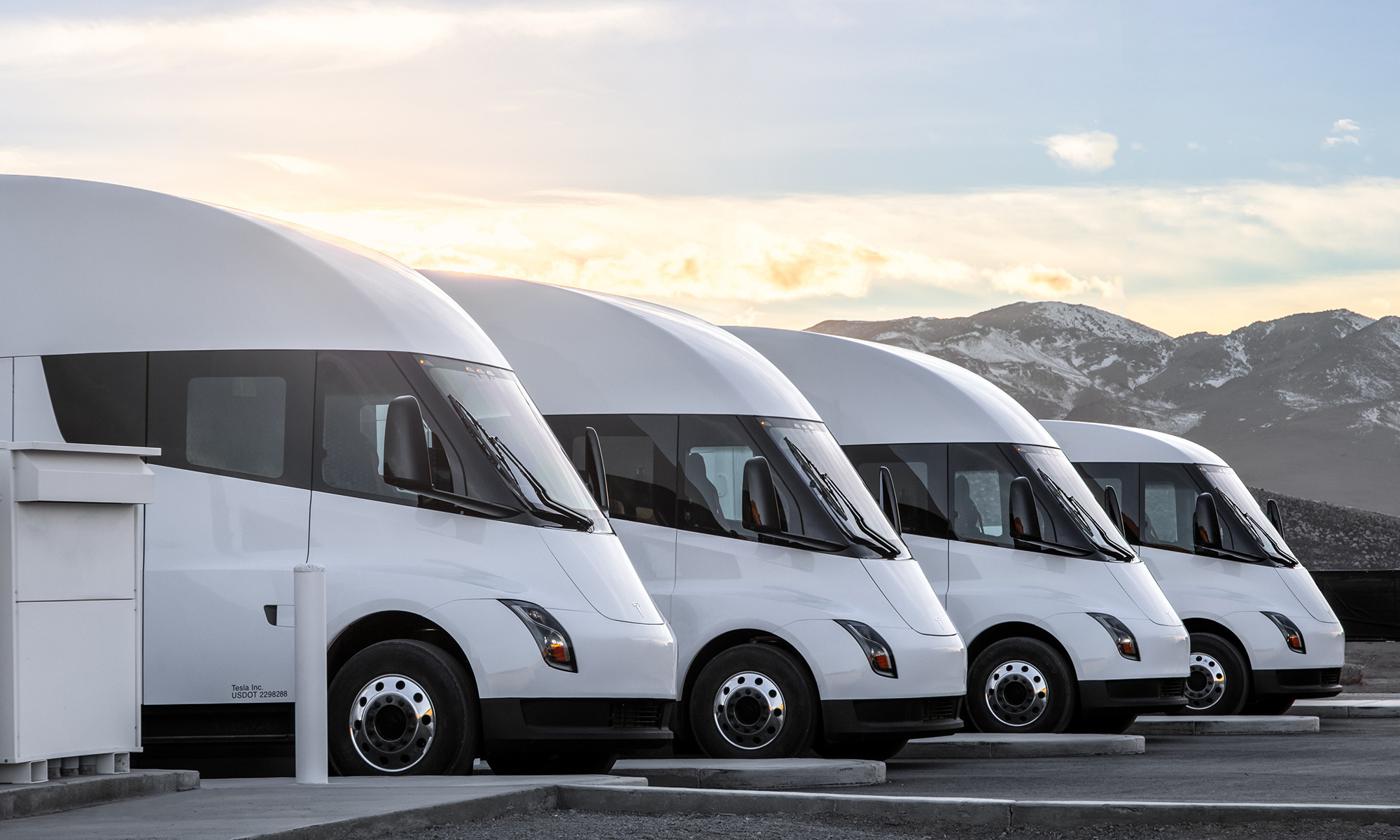
Image source: Tesla.
What it means for Tesla investors
Don’t expect too much too soon. While it’s exciting to watch the robotaxi fleet grow, Semi trucks enter production, and FSD approvals and take-up grow, and the Optimus showcase will garner attention, investors should view these as foundational events rather than immediate game changers. The real step up will occur in 2027.