







Nvidia (NVDA 1.86%) has been a leading artificial intelligence (AI) stock for years now, with its share price surging 600% over the past three years. But a funny thing happened after the company reported its impressive October quarter results: Its share price fell.
That’s not Nvidia’s fault, nor did investors have a good reason to punish the stock. But after its long and impressive run, it’s becoming difficult for Nvidia to sustain its share price momentum.
One reason may be that investors are realizing that the AI boom has much more room to grow outside Nvidia’s graphics processing unit (GPU) dominance. Namely, custom silicon processors are increasingly seen as the next iteration of AI hardware demand.
That’s great news for Marvell (MRVL +2.91%), Broadcom (AVGO +0.01%), and Taiwan Semiconductor (TSM 0.65%). Here’s why these stocks may pick up momentum while Nvidia shares take a breather.

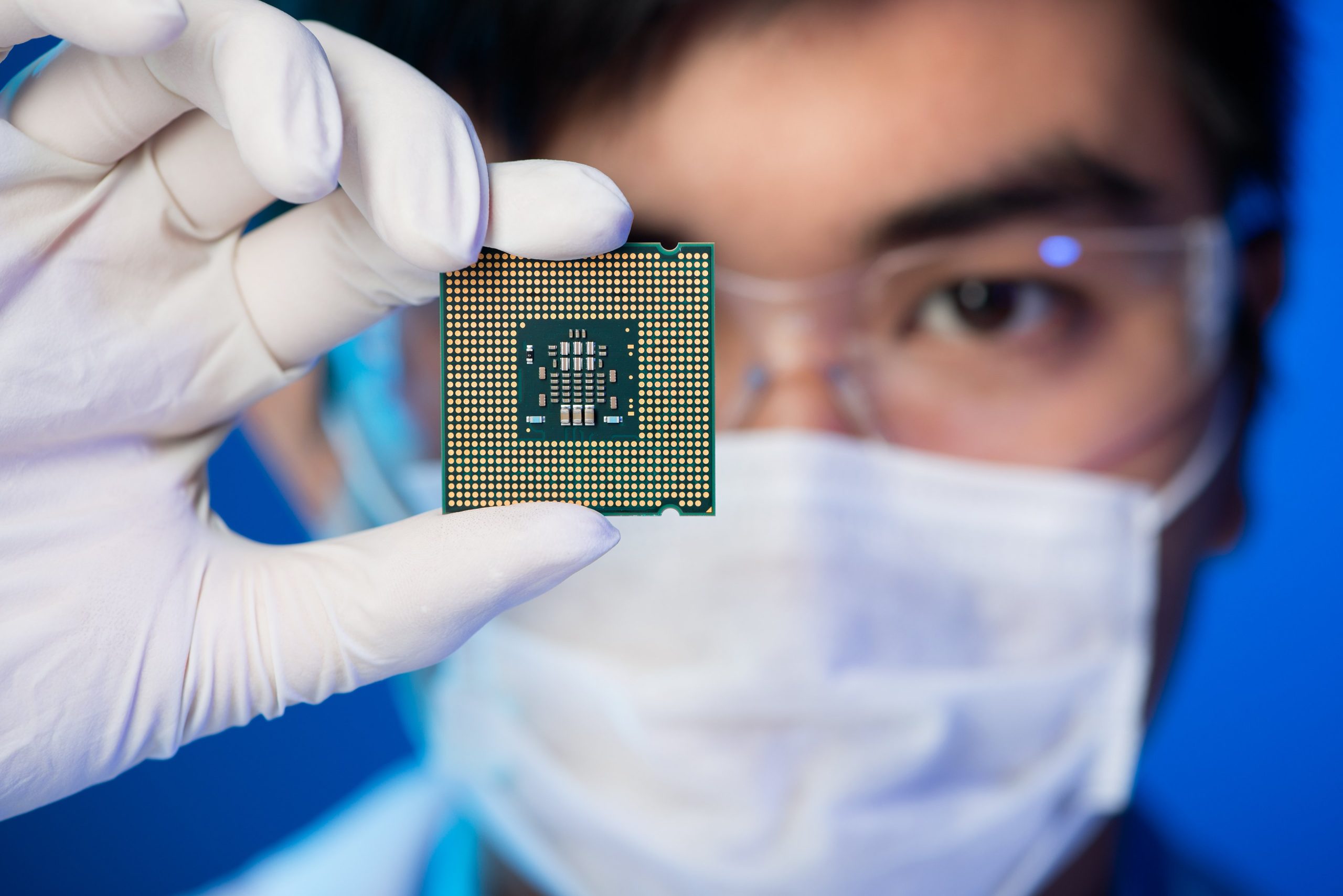
Image source: Getty Images.
Custom processors are the future of AI
For many years, Nvidia’s general-purpose GPUs have been the dominant form of data center processors. These chips are great for general AI computing tasks and can be used across a wide range of artificial intelligence applications.
But the world’s leading tech companies are also beginning to realize that custom semiconductors have some advantages over general-purpose GPUs. Specifically, they can tune the processors to work more efficiently with their specific AI models or systems.
In the hyper-competitive AI tech space, this could make all the difference in getting ahead. That’s why what Marvell and Broadcom do is becoming increasingly important.
Sales of Broadcom’s application-specific custom integrated circuits (ASICs) for customers doubled in the company’s first quarter to $8.4 billion. Alphabet is a leading customer, and the company recently signed a deal for Broadcom to expand its customer designs for Alphabet’s Tensor Processing Units (TPUs) for Alphabet’s AI data centers through 2031.
More AI sales are on the way. Broadcom’s management estimates that the company’s artificial intelligence revenue will reach $100 billion by next year.

Today’s Change
(0.01%) $0.03
Current Price
$414.60
Key Data Points
Market Cap
$2.0T
Day’s Range
$410.21 – $419.78
52wk Range
$231.13 – $442.36
Volume
585.5K
Avg Vol
23.8M
Gross Margin
64.96%
Dividend Yield
0.60%
Marvell is in a similar position. The company designs custom ASIC solutions for large tech companies, including Microsoft. The company reported strong AI-led growth in 2026, with total sales rising 42% to $8.2 billion.
Marvell is also the key design partner for Amazon‘s proprietary Trainium chips, and Nvidia announced in March that it would invest $2 billion in Marvell, with a partnership that gives Nvidia’s customers access to Marvell’s ASICs. This is an example of how both Marvell’s and Broadcom’s custom chips will likely work alongside, rather than fully replace, Nvidia’s GPUs for AI computing needs.
Taiwan Semiconductor wins no matter which chip designer pulls ahead
If you’re looking to benefit from the AI hardware rush — but don’t want to decide whether Nvidia, Marvell, or Broadcom will be the biggest winner — then Taiwan Semiconductor, also known as TSMC, should be your pick.
Unlike those companies, TSMC manufactures processors. The company holds 70% market share in global processor manufacturing, and an even more impressive 90% market share in advanced artificial intelligence processors.

Taiwan Semiconductor Manufacturing
Today’s Change
(-0.65%) $-2.63
Current Price
$404.52
Key Data Points
Market Cap
$2.1T
Day’s Range
$402.86 – $410.67
52wk Range
$190.56 – $421.97
Volume
7.1M
Avg Vol
13.7M
Gross Margin
60.72%
Dividend Yield
0.82%
TSMC’s sales surged 41% in the first quarter to $35 billion, and its net income jumped 58% to $3.49 per American depositary receipt (ADR). Management says sales will increase by 30% for the full year 2026.
TSMC CEO C.C. Wei called AI a “megatrend” on the company’s latest earnings call and believes his company will continue to capitalize on the surging demand for making AI processors. With tech companies still needing Nvidia’s GPUs, as well as custom silicon, TSMC is perfectly positioned to benefit from all AI processor needs, no matter which processors win out.
Why custom silicon could be a better investment than Nvidia by 2030
There’s no guaranteeing that TSMC, Broadcom, and Marvell stocks will outperform Nvidia by 2030, but I think the trend toward custom silicon gives these companies a good chance of doing so. Recent data from Semianalysis estimates that Google’s TPUs could reduce its computation costs by 62% relative to using Nvidia’s processors. Earlier this year, Microsoft debuted its own custom Maia 200 chip for AI inference, which it partnered with Marvell to design. Microsoft says the chip will “dramatically improve the economics of AI token generation.”
The world’s leading AI companies, Anthropic and OpenAI, are moving in the direction of custom chips as well. Anthropic has already expanded a collaboration with Broadcom to access 3.5 gigawatts of Broadcom’s and Google’s TPUs, starting next year.
Custom ASIC processors are expected to grow by an estimated 45% this year, compared with GPUs’ 2026 growth rate of 15%. As this shift continues, Marvell, Broadcom, and Taiwan Semiconductor could see their share prices make big gains as investors ride the next AI hardware wave.