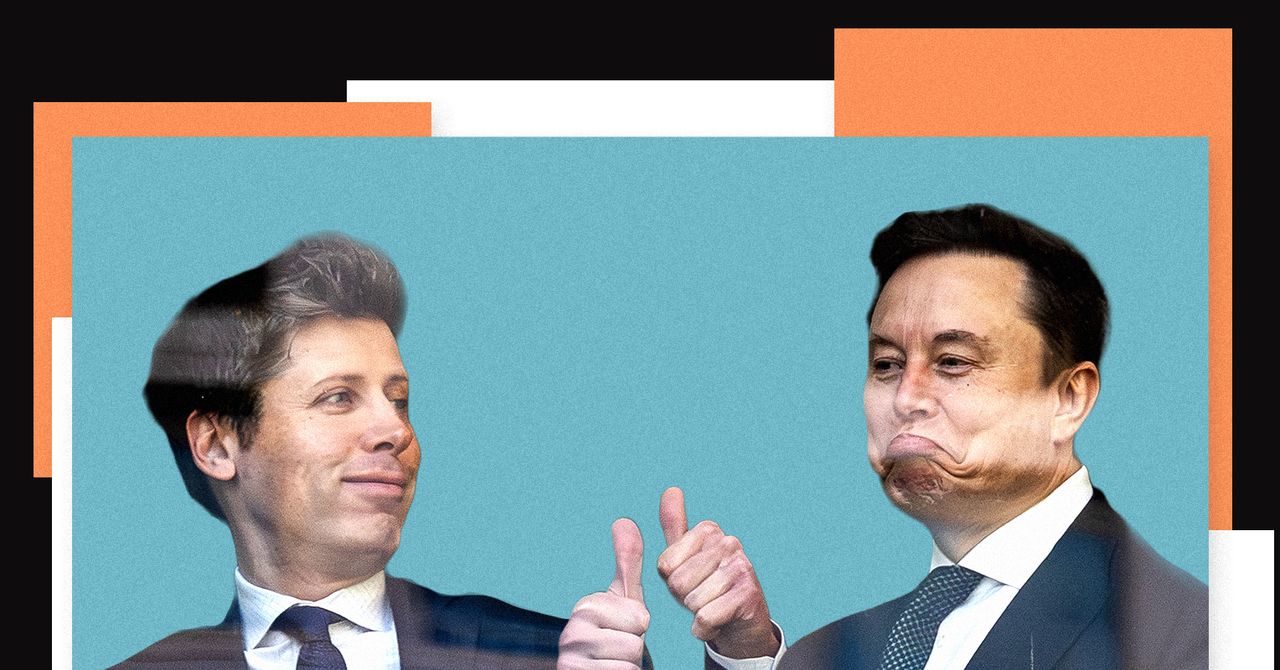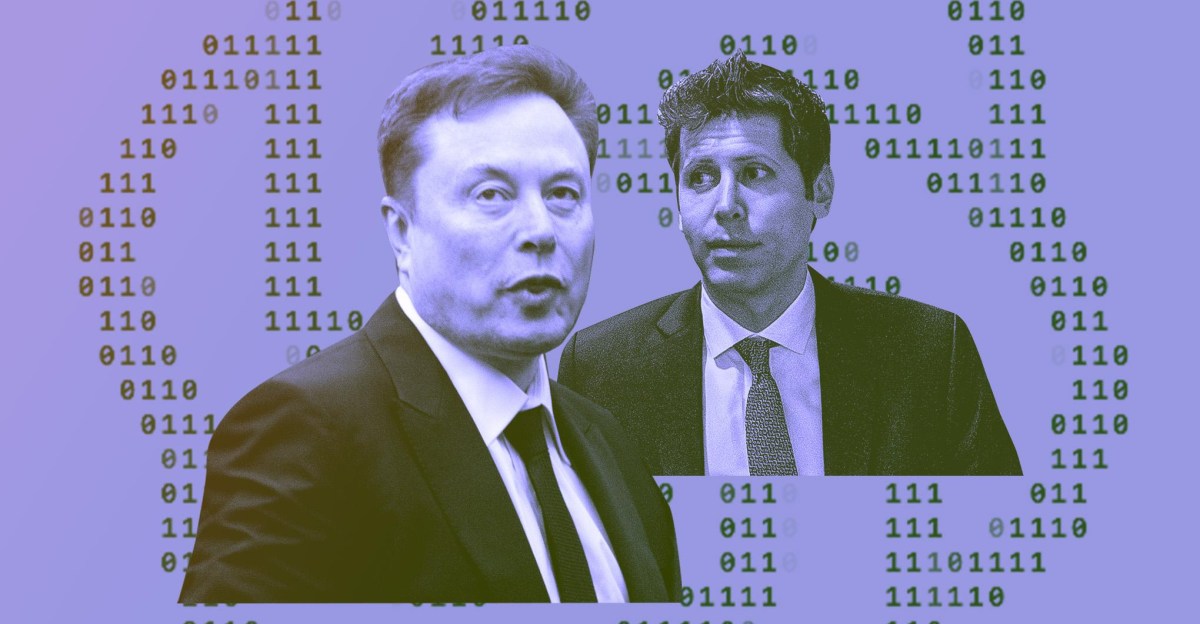







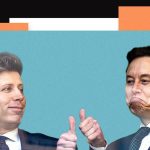
The tech trial of the year, Musk v. Altman, was ultimately a fight for control. Elon Musk argued that Sam Altman, with whom he helped found the now-massive company OpenAI, shouldn’t direct the future of AI. Altman’s lawyers, in turn, poked at Musk’s own credibility. A jury came to a verdict on Monday after just two hours of deliberation, dismissing Musk’s claims due to the statute of limitations.
In a strictly legal sense, three weeks of testimony added up to nothing. But the trial offered a more damning broader takeaway: Almost nobody in this saga seems worth trusting. Some of the most powerful people in tech seem temperamentally incapable of dealing with each other honestly. And if that’s true, it raises a bigger question: Why are they in control of a trillion-dollar industry that’s set to upend people’s lives?
OpenAI was, in the testimony of both Musk and Altman, founded to stop powerful AI from being owned and advanced by the wrong people. Testimony and evidence showed its founding team fretting about who would control artificial general intelligence (AGI), a buzzword for AI that broadly equals or surpasses human knowledge and ability. They deeply feared Google DeepMind and its leader, Demis Hassabis. In 2015, Altman said he’d been mulling over whether anything could “stop humanity from developing AI” — and after concluding it was impossible, that he wanted “someone other than google to do it first.”
Fellow cofounders Greg Brockman and Ilya Sutskever so strongly opposed one-person control that they seemed willing to torpedo a lucrative deal that could — in their words — give Musk an “AI dictatorship.” In a part of the same email addressed to Altman, Brockman and Sutskever questioned his motivations, writing, “We haven’t been able to fully trust your judgements throughout this process … Is AGI truly your primary motivation? How does it connect to your political goals?”
These concerns would be quickly borne out. A central focus of Musk v. Altman was “the blip,” a five-day period in November 2023 when OpenAI’s board removed Altman as CEO. Sutskever had spent more than a year architecting his ouster, assembling a 52-page memo alleging “a consistent pattern of lying, undermining his execs, and pitting his execs against one another.” The implications were broader than executive infighting, potentially impacting the public rollout of AI systems. Then-CTO Mira Murati, for instance, testified in court that Altman told her OpenAI’s legal team had okayed skipping a safety review for one of its models — a statement, she said, that turned out to be false.
In closing arguments, Musk attorney Steven Molo hammered home the long list of people who had testified under oath that Altman was, in one way or another, a liar — all of whom Altman had worked with for years. “The defendants absolutely need you to believe Sam Altman,” Molo told the jury. “If you cannot trust him, if you don’t believe him, they cannot win. It’s that simple.”
But during court proceedings, Musk — who now leads competing lab xAI, under his space company SpaceX — didn’t come off any better. Joshua Achiam, now OpenAI’s chief futurist, testified that Musk’s race against Google led him to take an “obviously unsafe and reckless” approach to achieving AGI. When he and others raised concerns, he says, Musk argued that OpenAI’s for-profit makeover created incentives to disregard safety, but his own xAI is for-profit and has, at best, a haphazard approach to safety. And in the name of making sure OpenAI remained open, Musk was obsessive in his need for control over it. In closing arguments, Sarah Eddy, one of OpenAI’s attorneys, told the jury that Musk “wanted dominion over AGI.”
As one X user put it, “if untrustworthyness had mass, putting Musk and Altman too close to one another would collapse the courtroom and all of earth into a black hole.”
OpenAI and Musk did not immediately respond to requests for comment.
It’s not just Musk and Altman, either. Trial evidence suggested Murati helped get Altman removed, then switched sides to support his reinstatement while appearing “totally uninterested” in disclosing the role she’d played. Shivon Zilis, a close Musk associate who served on OpenAI’s board, asked Musk if he’d “prefer I stay close and friendly to OpenAI to keep info flowing” during his departure — avoiding revealing that she had two children with him at the time. Brockman’s diary entries played a key role in Musk’s case; at one point, he admitted Musk could “correctly” claim “we weren’t honest with him” if OpenAI made a for-profit shift without his involvement.
Musk v. Altman gave each man an opportunity to sling dirt at the other and, in theory, establish himself as the more scrupulous guardian of AI. But a more obvious takeaway is that several of the AI industry’s household names are at best naive — and, at worst, hypocrites with little regard for the consequences of their actions.
Public sentiment about AI is at an all-time low. In a Pew Research survey from last summer, half of US adults said the “increased use of AI in daily life makes them feel more concerned than excited” — and only 10 percent said they felt more excited than concerned. Many of these concerns are related to job loss, but protests are also surging against mass data center construction across the country. Some resistance has turned potentially violent, with individuals allegedly attempting to attack Altman’s home on two occasions. And many tech CEOs themselves maintain that they have bunkers or other doomsday-prepping plans for if things go horribly wrong.
These companies push public messaging that AI empowers its users. But a 2025 Pew Research study found that nearly 60 percent of US adults feel they have little to no control over how AI is used in their lives. In the US, the prospect of meaningful government regulation — which could at least offer some level of external oversight — remains shaky. And now, it’s clearer than ever how far the AI world’s biggest players will go to maintain control.
Amid the trial’s reams of evidence, one document offers a rare example of Altman and Musk offering to cede some power. In March 2015, Altman emailed Microsoft CEO Satya Nadella with a simple request: Sign a letter that he and Musk were drafting, asking the US government to establish “a new regulatory agency for AI safety” and address “the biggest risk to the continued existence of humanity that most people are ignoring.” Weeks later, Nadella responded to shut down the idea. The “issue of human safety and the control problem will become real issues,” he said. But executives, he insisted, should be calling for “federal funding and encouragement of research,” not oversight. Altman promptly agreed. The letter, he promised, would be changed — leaving the option of regulating the AI industry “if and when.”