







The term “solar energy” may immediately conjure images of solar panels, but you don’t need to convert sunlight to electricity to harness its power. As a self-professed solar nerd, I’ve played around with a few different alternatives, including a large parabolic mirror that could instantly set paper on fire – and cook a meal. No gas, electricity or even a wood fire needed.
When everything lined up, it almost felt magical. It’s hard to beat the sound and smell of fried potatoes sizzling on a blistering hot cast-iron pan, and I loved putting that bright Arizona sun to good use. But it also revealed some challenges. It was awkward to carry and set up, slight misalignment caused uneven cooking, wind sapped the heat, and a passing cloud could lead to a half-cooked meal.

GoSun
Sport-E Hybrid Solar Oven
$229
That’s why GoSun’s Sport-E caught my attention. It’s a compact solar oven with a built-in fallback. When the sun isn’t shining brightly enough, you can plug in to a battery to keep cooking instead of shifting the meal to a gas grill or hauling it back inside.
As it turns out, this clever hybrid approach changes solar cooking from a novel experiment to a clean, green way to cook in the great outdoors.
What to know
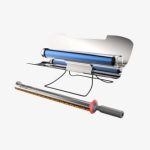
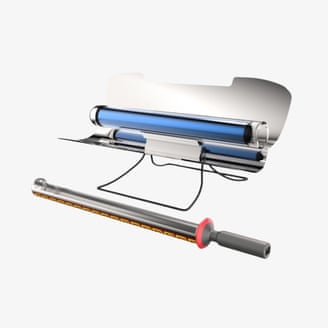
The GoSun looks like a giant glass tube with two wing-like mirrors that unfold from it. Like a Stanley mug, the walls of the tube are vacuum insulated to retain heat. While the outer wall is clear, the inner wall is coated with blackened copper to absorb and radiate heat inward. An electric heating element in the bottom of the tray, similar to the one in your oven, provides additional heat when needed and the copper lining helps distribute it evenly.
Food slides in through a long scoop-shaped tray, like a giant garden trowel: veggies, kebabs, you can even cook bread in it. Despite the compact size, the 36oz tray holds enough to comfortably feed two. If you’re cooking for more, GoSun’s Fusion model has more than twice the capacity.
This isn’t the fastest or biggest outdoor cooker, but it isn’t trying to be. It’s a compact, eco-friendly oven for beach days, road trips, camping, backyard lunches and even power outages, rather than a replacement for a camping stove.
In the box, you get the solar oven with attached sundial, a hybrid electric cooking tray, a cleaning brush attachment, a power cord, a carrying case and eight silicone baking cups.
Specs
Testing
When packed up, the Sport-E’s reflectors wrap around the glass tube, so it feels well-protected and easy to grab and go. The handle doubles as legs, and the reflectors unfold to capture 338 sq in of sunlight. That’s only two-thirds the size of my old 26in parabolic mirror, but the Sport-E is much more reliable and infinitely more manageable.
Like any solar device, the Sport-E works best in full sun, but sparse clouds are workable, if you’re patient. A 20-min meal might stretch to 40 min or even an hour. It’s best to start a little early if you have any doubts about the forecast.
GoSun claims the Sport-E reaches up to 550F in ideal conditions, but I found 350F was a more reasonable expectation where I live in Canada. I’ll never match the performance of lower latitudes, but it was still hot enough to steam potatoes, cook quinoa, stir-fry veggies and bake bread and brownies. GoSun recommends using a meat thermometer to ensure food reaches a safe internal temperature, which is one more reason to eat a plant-based diet.
What we love
The Sport-E is built for real-world conditions. You don’t need to endlessly tinker to get the perfect position or shift a pan to avoid uneven cooking. Just unfold the large solar reflectors and tilt the base so the shadow dot aligns with the sundial-like indicator. The oven faces the sun directly and collects the most heat when the dot is centered.
GoSun
Sport-E Hybrid Solar Oven
$229
That simplicity makes it easier to trust. I don’t need a solar oven to replace every other cooking method. I need it to work often enough, and well enough, that I’ll actually want to bring it along.
Even in my late-winter testing with snow covering my yard, the heat-absorbing, vacuum-insulated oven built enough heat to cook hardy vegetables including potatoes. Stronger sunshine builds more heat much faster, but I was impressed that it could still cook in less-than-ideal conditions.
The electric mode is what really sold me on this cooker. When the sun falters, the Sport-E works with a 12V DC input, so I can plug it into my car or a portable battery pack. As with my Toyota Prius C, I get to use the greener option as much as possible, then fall back gracefully when I need to.
Drawing just 100 watts, the Sport-E will run from my car’s accessory plug, but I prefer using it with a lightweight DJI Power 1000 Mini battery pack, since I can recharge it with a solar panel. During a recent stormy-day power outage, I used the electric mode to bake eight small bread loaves. It took about as long as using a toaster oven, but the Sport-E is so efficient that the bread used less than 5% of the battery.
On a clear spring day, I took the Sport-E to the beach, so my wife and I could enjoy a vegan kebab with an ocean view. Instead of spearing the tofu and veggies, I used parchment paper as a tray liner, then scooped the food into our Fozzils fold-flat bowls. It was a perfect example of clean, portable cooking.
What we don’t love
The Sport-E is practical, but it isn’t effortless. You still need to pay attention to conditions, making small adjustments to track the sun. Fortunately, the vacuum tube and reflector design is more forgiving than a parabolic mirror, which focuses light to a single point.
One particularly windy day, gusts pushed the upper reflector forward until I secured it with a binder clip and a piece of cord tied off to the leg. It was an easy fix, but not the type of thing you’d worry about with a conventional grill.
Speed is the bigger caveat. While the Sport-E warms up quickly, I never reached a high enough temperature for roasting. Even in sunny climates, a grill or camp stove will usually be faster.
A tube is an unusual shape for an oven. The unique design makes sense for a solar cooker, but it requires some preplanning and prep work. Instead of one big loaf, make several small loaves of bread. Instead of whole potatoes, dice them or slice them into fries.
Is it worth it?
If you enjoy the outdoors or camping and want to prepare hot meals away from home, GoSun’s Sport-E is a novel, green way to do it. It solves the most common problem with solar cooking, removing you from the mercy of the weather with backup electric power. And unlike the glorified food warmers sometimes marketed as “12V ovens”, the insulated design will reach real-deal oven heat.
That’s the difference between a clever gadget that sits on the shelf and a tool I’ll use again and again.
Other pieces you might enjoy from the Filter, the Guardian’s guide to buying fewer, better things:


