







Most folks will want to connect via the HDMI port, which syncs up with your TV’s HDMI eARC/ARC input for high-quality sound transference and the ability to control power and volume with your TV remote. The optical input is a backup for (much) older TVs, or even a CD player, but there’s no spare HDMI port for connecting a Blu-ray player or game console directly, let alone an analog input for legacy audio gear like a turntable.
You won’t want to go much further without downloading the Bravia Connect app, which walks you through the full setup process and is the only way to access to settings like Bluetooth pairing so you can stream music from your phone. A single power button at the bar’s left flank is the sole onboard control key, while a two-dot LED system up front provides a basic visual display.
The Bar Necessities

Photograph: Ryan Waniata
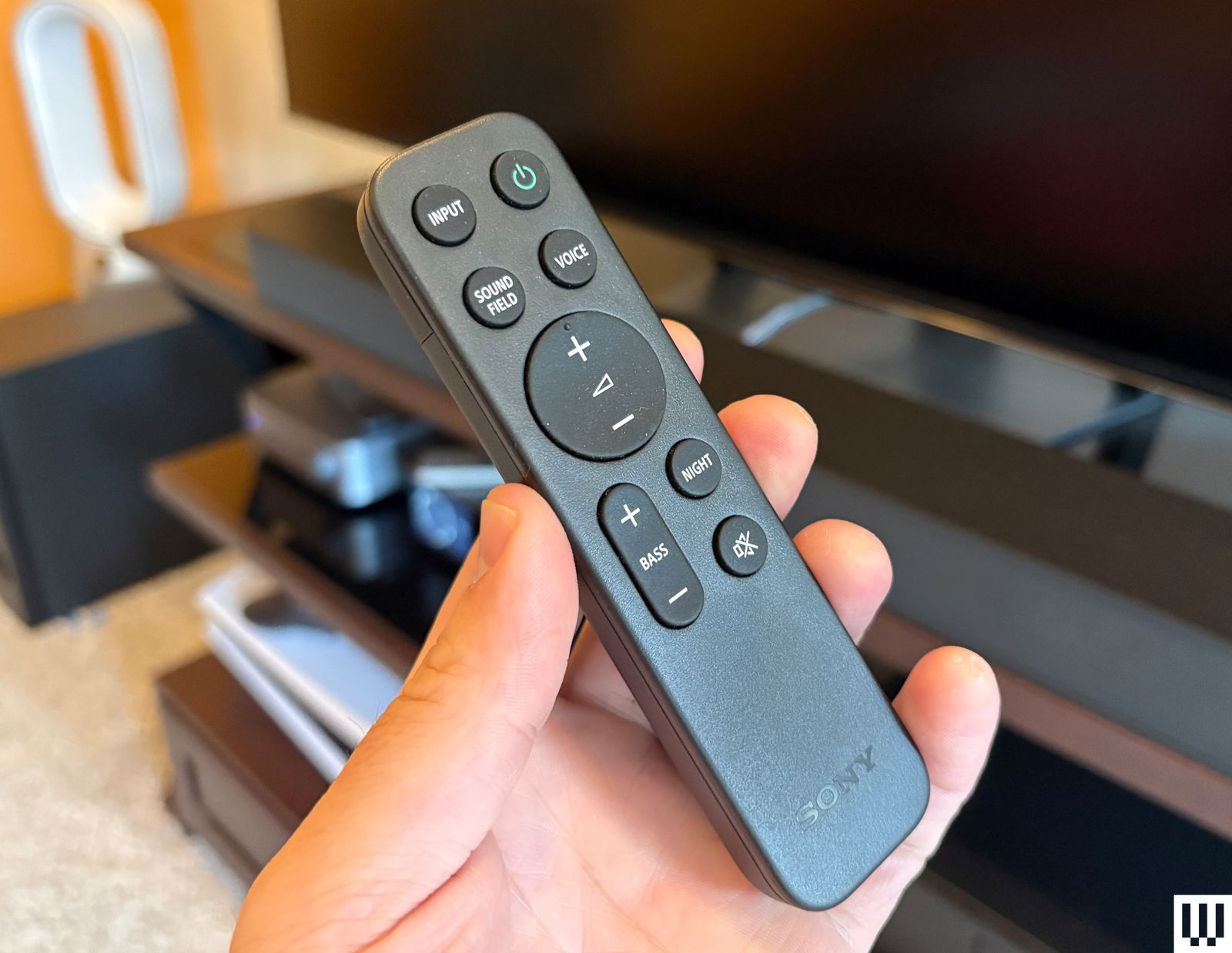
Sony’s app picks up where the hardware leaves off, including a handy function that identifies your current sound format and resolution quality. The app’s uncluttered layout makes it easy to swap between the limited input options, adjust the bass, or even power up the bar from sleep mode to stream music. The Twix-shaped remote is essentially redundant, but it’s nice to have a backup when your phone is out of reach.
The bar offers a few sound mode options, including voice mode, which I never felt the need to employ; night mode to chill out the bass for late-night listening; and sound field mode, which uses Sony’s virtual surround software to enhance surround sound and 3D audio formats.
Speaking of audio formats, that’s one place where the Theater Bar 5 doesn’t skimp, supporting all the top high-resolution options from Dolby and DTS, including Dolby Atmos spatial audio and its rival, DTS:X. The bar’s 3.1-channel configuration means you don’t get surround speakers or the kind of upfiring drivers found in the best Dolby Atmos soundbars that provide overhead sound immersion. Even so, the bar’s virtual audio trickery impressed me with its ability to expand sound from its sides.