









In just a couple months, SpaceX will finally hold its IPO — and not only SpaceX.
Thanks to a series of pre-IPO mergers, when SpaceX goes public, investors will also gain access to social media site X and artificial intelligence company xAI. But here’s the thing: There are a whole lot of ways to invest in artificial intelligence these days, and Twitter, the company that preceded X, was a publicly traded stock for years before Musk bought it.
But there’s no other space company quite like SpaceX for you to invest in.
Yet.
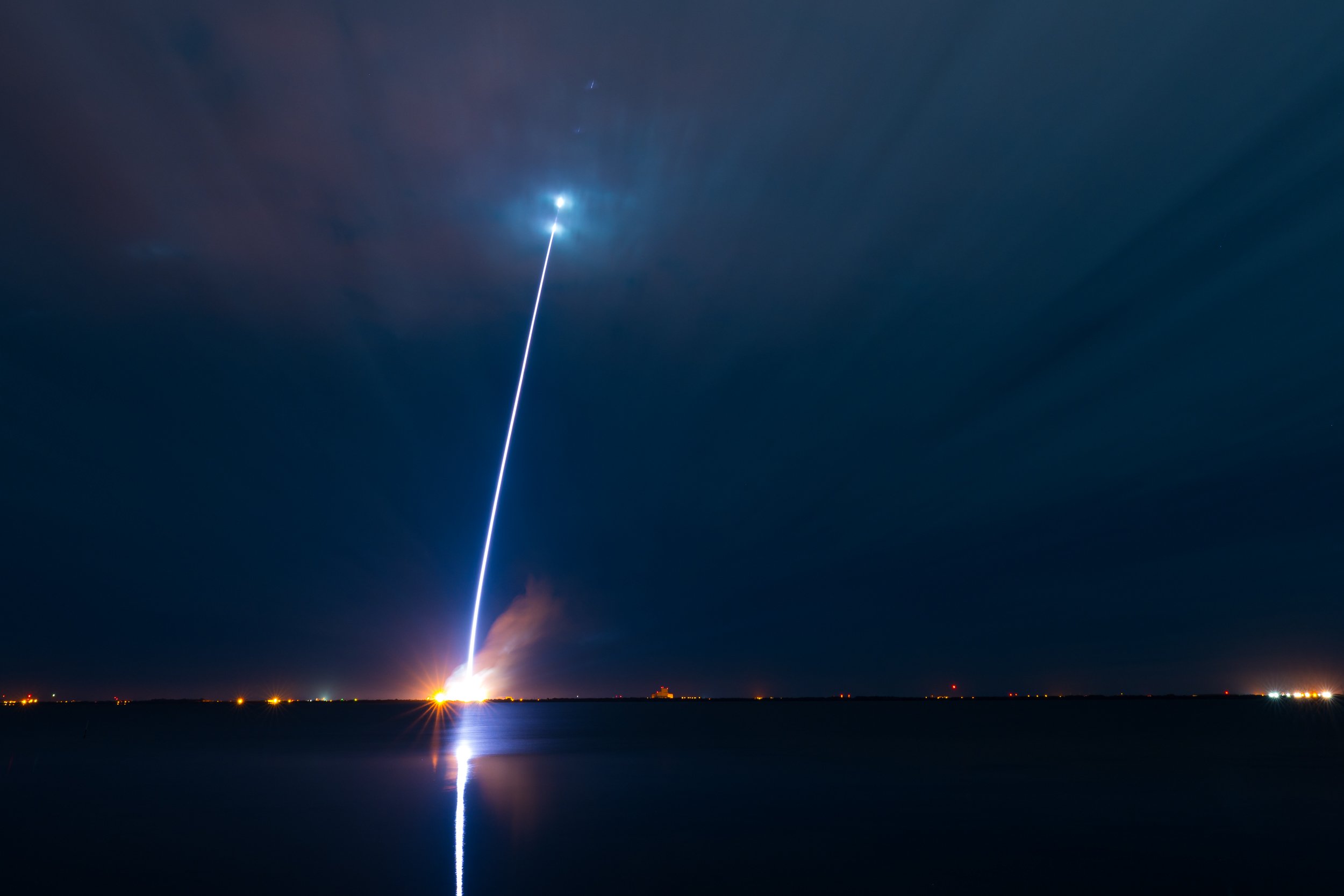
Image source: Blue Origin.
Introducing the new SpaceX: Blue Origin
If you ask him, he’d probably deny it, but Amazon (AMZN +0.55%) founder Jeff Bezos appears to be trying to build a company very similar to SpaceX. Granted, this company, Blue Origin, hasn’t said it will IPO like SpaceX will.
Then again, it hasn’t said it won’t IPO either.
How closely is Blue Origin imitating SpaceX? Well, SpaceX won a contract to land astronauts on the moon. After a few lawsuits and some frenetic development work, Blue Origin now has a couple of landers of its own — and wants to send them both to the same place. You say SpaceX built a satellite internet system called Starlink? What a coincidence! It just so happens that Blue Origin is gearing up to use its rockets to build a similar system for Amazon.
And then of course there’s the rockets themselves.
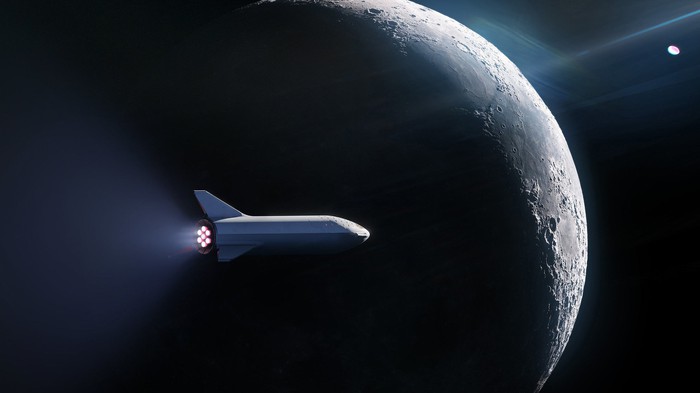
Artist’s depiction of Starship traversing the moon. Image source: SpaceX.
Falcon 9 versus New Glenn versus Starship
Arguably, SpaceX’s most ambitious project ever is its attempt to build an entirely reusable mega-rocketship called Starship. (You may have heard of it.) Capable of lifting 100 tons of cargo at a time to Low Earth Orbit, Starship boasts a payload capacity at least five times that of SpaceX’s workhorse Falcon 9 (partially) reusable rocket.
Of course, not every customer needs to hire a rocket capable of lifting an entire space station to orbit all in one go. So when Bezos set out to imitate SpaceX in rocketry, he planned conservatively. Blue Origin’s own megarocket, called the New Glenn, boasts an LEO payload capacity of “only” 45 metric tons (still twice that of Falcon 9).
Like Falcon 9, New Glenn is designed with a reusable first stage. Like Falcon 9, it’s designed to be reused many, many times — 25 relaunches, minimum — before being retired. Like Starship, it can carry massive volume — about twice that of most other heavy-lift rockets.
Unlike Starship, it’s already proven it can fly, and has actually begun flying commercial missions to space.
Blue Origin ramps up
And Blue Origin isn’t finished with it. As Ars Technica reported last month, Blue is already working on a second version of New Glenn, featuring twice as many engines (i.e., four) on the rocket’s upper stage and, correspondingly, greater “oomph” when carrying cargo to orbit.
This “Newer Glenn” (I’m going to trademark that, by the way) rocket is scheduled to debut in 2027, and that’s when things will get really interesting for Blue Origin — and for SpaceX. As Ars reports, Blue plans to ramp production of Newer Glenn rockets from 12 per year currently to 60 per year by late 2028. Just one year later, Blue hopes to hit 100 Newer Glenns built and launched per year.
And this is key: According to Ars, these Newer Glenn rockets will be in addition to any plain old New Glenn rockets Blue Origin builds!
Result: From launching approximately two rockets per year currently, Blue Origin plans to quickly advance to one launch per month, then one launch per week a few years from now. Within three or four years, Blue could be launching once every day or two — kind of like how SpaceX launches its Falcon 9s now.
The best laid plans of mice and billionaires
Admittedly, after reporting Blue’s heady ambitions, Ars concluded that the company’s targets are almost certainly “overly optimistic.” Nothing happens on time or on budget in space, and it’s unlikely even Jeff Bezos can change that law of nature.
But it won’t stop him from trying — and for would-be investors in the SpaceX IPO, that’s what’s really important.
Why? Well, because Bezos and Blue clearly intend to challenge SpaceX’s dominance in space launch, and that competition is certain to pressure launch prices going forward. From precisely zero orbital rockets launched in 2024, versus 134 for SpaceX, Blue Origin has advanced to a point where it may already be just a few years behind SpaceX in the number of rockets it’s launching. (And every New Glenn that launches already carries as much cargo as two Falcon 9s.)
Maybe Starship will change this dynamic when it’s finished. Maybe it won’t. The only thing for certain is that, if you could look in the rearview mirror of Elon Musk’s space-traveling Tesla, you’d see Blue Origin right behind it.
And objects in the mirror are closer than they appear.