







The main antagonist of Toy Story 5, in theaters this summer, is a green, frog-shaped kids’ tablet named Lilypad, a genius new villain for the beloved Pixar franchise. But if Pixar had its ear to the ground, it might have used an AI kids’ toy instead.
AI toys are seemingly everywhere, marketed online as friendly companions to children as young as three, and they’re still a largely unregulated category. It’s easier than ever to spin up an AI companion, thanks to model developer programs and vibe coding. In 2026, they’ve become a go-to trend in cheap trinkets, lining the halls of trade shows like CES, MWC, and Hong Kong’s Toys & Games Fair. By October 2025, there were over 1,500 AI toy companies registered in China, and Huawei’s Smart HanHan plush toy sold 10,000 units in China in its first week. Sharp put its PokeTomo talking AI toy on sale in Japan this April.
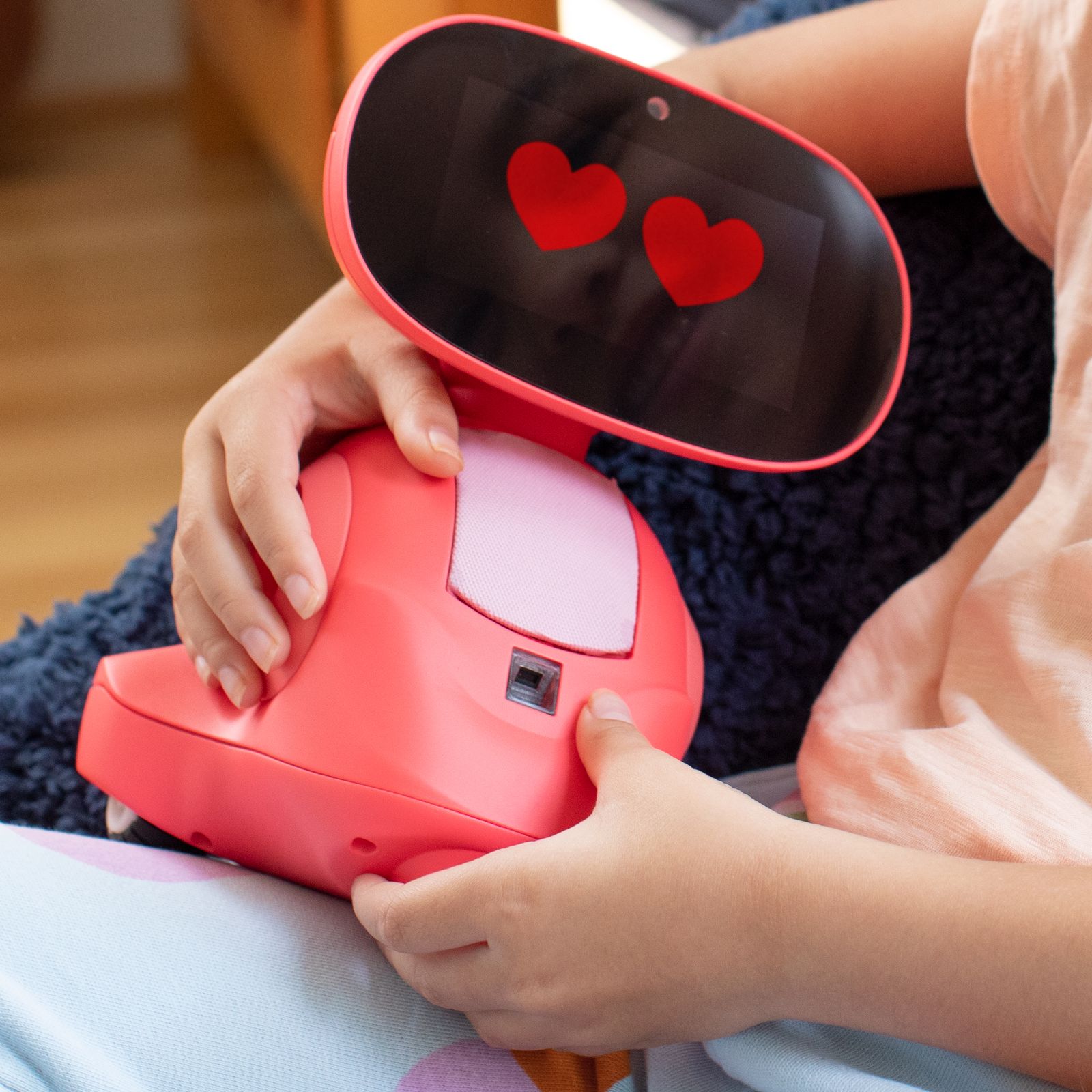
But if you browse for AI toys on Amazon, you’ll mostly find specialized players like FoloToy, Alilo, Miriat, and Miko, the last of which claims to have sold more than 700,000 units.

Courtesy of Miko
Consumer groups argue that AI toys, in the form of soft teddy bears, bunnies, sunflowers, creatures, and kid-friendly “robots,” need more guardrails and stricter regulations. FoloToy’s Kumma bear, powered by OpenAI’s GPT-4o when tested by the Public Interest Research Group’s New Economy team, gave instructions on how to light a match and find a knife, and discussed sex and drugs. Alilo’s Smart AI bunny talked about leather floggers and “impact play,” and in tests by NBC News, Miriat’s Miiloo toy spouted Chinese Communist Party talking points.
Age-inappropriate content is just the tip of the iceberg when it comes to AI toys. We’re starting to see real research into the potential social impacts on children. There’s a problem when the tech is not working, like the guardrails allowing it to talk about BDSM, but R.J. Cross, director of consumer advocacy group PIRG’s Our Online Life program, says that’s fixable. “Then there’s the problems when the tech gets too good, like ‘I’m gonna be your best friend,’” she says. Like the Gabbo, from AI toy maker Curio. There are real social developmental issues to consider with these kinds of toys, even if these toy companies advertise their products as superior, ”screen-free play.”
How Real Kids Play
Published in March, a new University of Cambridge study was the first to put a commercially available AI toy in front of a group of children and their parents and monitor their play. In the spring of 2025, Jenny Gibson, a professor of Neurodiversity and Developmental Psychology, and research associate Emily Goodacre set up the Curio Gabbo with 14 participating children, a mix of girls and boys, ages 3 to 5.
Gabbo didn’t talk about drugs or say “I love you” back. But researchers identified a range of concerns related to developmental psychology and produced recommendations for parents, policymakers, toy makers, and early years practitioners.
First, conversational turn-taking. Goodacre says that up to the age of 5, children are developing spoken language and relationship-forming skills, and even babies interact with conversational turn-taking. The Gabbo’s turn-taking is “not human” and “not intuitive,” she says. Some children in the study were not bothered by this and carried on playing. Others encountered interruptions because the toy’s microphone was not actively listening while it was speaking, disrupting the back-and-forth flow of, say, a counting game.