









Although retirement accounts like 401(k)s and traditional IRAs allow you to deduct your contributions from your taxable income, you don’t get to avoid taxes altogether. You’re responsible for paying them on the back end when you make withdrawals in retirement.
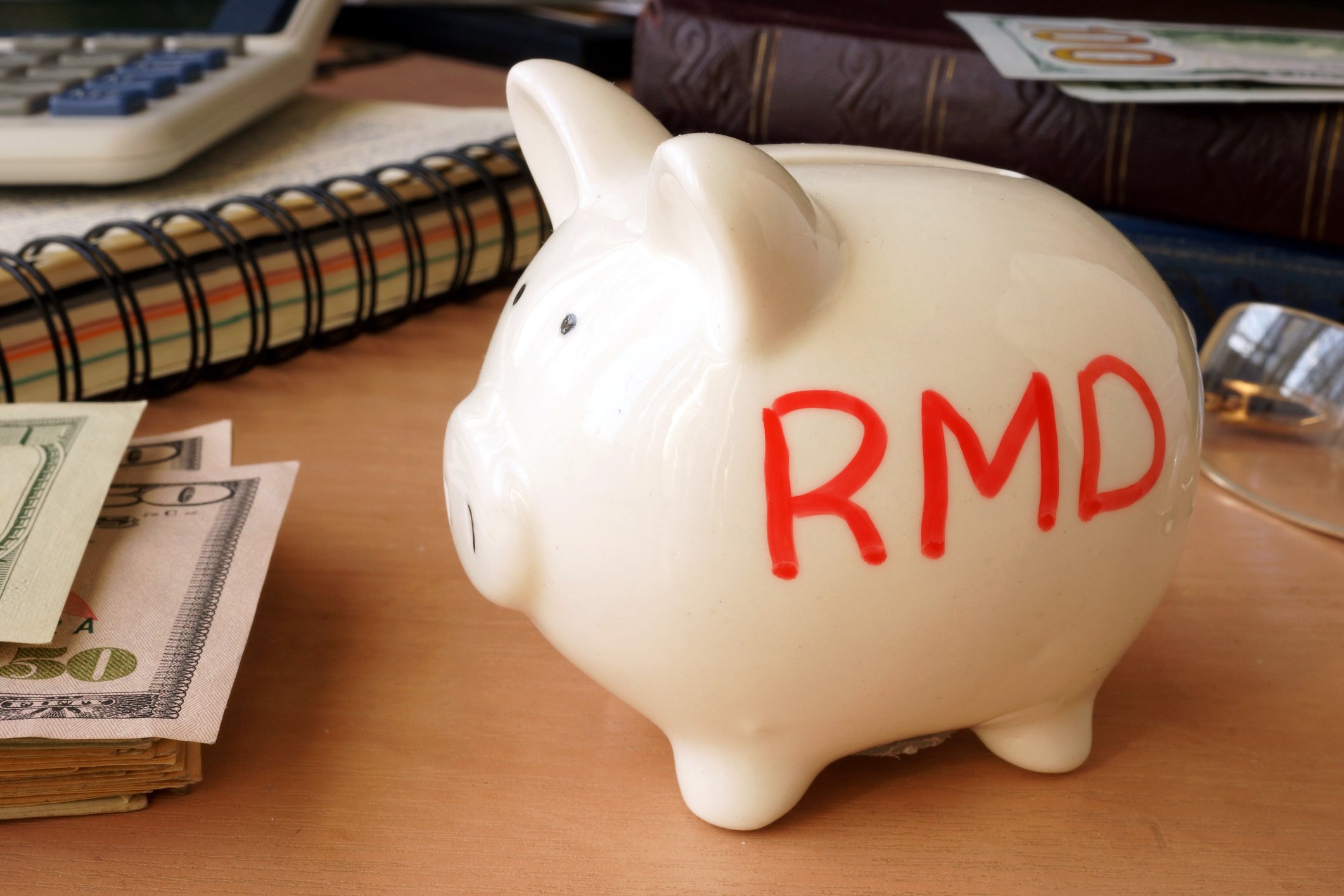
To prevent people from not making withdrawals and avoiding paying taxes, the IRS put in place required minimum distributions (RMDs). For people born between 1951 and 1959, RMDs kick in the year you turn 73. The RMD for people born in 1960 or later has increased to 75.
That initial year, you’ll have until April 1 of the following year to take your RMDs. If someone is turning 73 this year, they’ll have until April 1, 2027, to take their RMDs. In every other year, you’ll need to take your RMDs by Dec. 31 (even if you delay your first RMD until April).
The “required” in required minimum distributions is there for a reason, and there are ways to rack up penalties, whether knowingly or not. Here’s how you can avoid that.
Image source: Getty Images.
How to calculate how much your RMD is
One of the first mistakes someone makes is not knowing how much they’re supposed to withdraw. Here are the three steps to calculating the number:
- Find your account balance at the end of the previous year. If you’re looking for this year, it’d be the balance on Dec. 31, 2025.
- Look for the life expectancy factor (LEF) that matches your age and marital status (the IRS provides these).
- Divide your account balance by your LEF.
Regarding the LEF, if you’re single, married to someone within 10 years of your age, or married to someone who isn’t the sole beneficiary of your IRA, you’ll use the Uniform Lifetime table. Everyone else will use the Joint Life and Last Survivor Expectancy table.
Let’s take someone who had $1 million in their retirement account at the end of 2025 and is using the Uniform Lifetime table. Here is how much their RMDs would be from ages 73 to 80:
| Age | Life Expectancy Factor | Required Minimum Distribution |
|---|---|---|
| 73 | 26.5 | $37,736 |
| 74 | 25.5 | $39,216 |
| 75 | 24.6 | $40,650 |
| 76 | 23.7 | $42,194 |
| 77 | 22.9 | $43,668 |
| 78 | 22.0 | $45,455 |
| 79 | 21.1 | $47,393 |
| 80 | 20.2 | $49,505 |
Table by author. RMDs are rounded to the nearest dollar.
Most major platforms will also provide your RMD, but they won’t automatically move the money. You’re responsible for that regardless. Some people choose to take their entire RMD at the beginning of the year to get it over with, while others treat it like a paycheck and “pay themselves” every month, quarterly, or whatever works for them.
Taking a lump sum and getting it over with is the easiest way to ensure you don’t miss your RMD, but some people prefer to leave their money invested and let it grow (though a decline is also possible).
Missing your RMD isn’t a cheap mistake
If you don’t take your RMD, you’ll face a penalty of 25% of the amount you didn’t withdraw. For example, if you were supposed to withdraw $40,000 and only withdraw $10,000, your penalty would be $7,500 (25% of $30,000).
If you take the appropriate RMD within two years of the deadline, your penalty could be reduced to 10% of the amount you didn’t withdraw. In this case, it would reduce the fee to $3,000.
RMD penalties are big business for the IRS. They have collectively cost people $1.7 billion annually, according to research from Vanguard. The company also said that 7% of people with a Vanguard IRA missed their RMD in 2024, averaging over $1,100 in penalties.
Accidents happen, but some are costlier than others.
RMDs for 401(k)s and IRAs are treated differently
If you have multiple 401(k)s — which is common as people change jobs throughout their career — you must take your RMD from each account separately. You can’t combine the totals and then take the RMD from one of the accounts. Even if you withdraw more than you were supposed to from one 401(k) but didn’t withdraw from others, you’ll still be hit with the penalty.
On the other hand, if you have multiple traditional IRAs, you can calculate your RMDs from all of them combined and take the total RMD from a single account.