






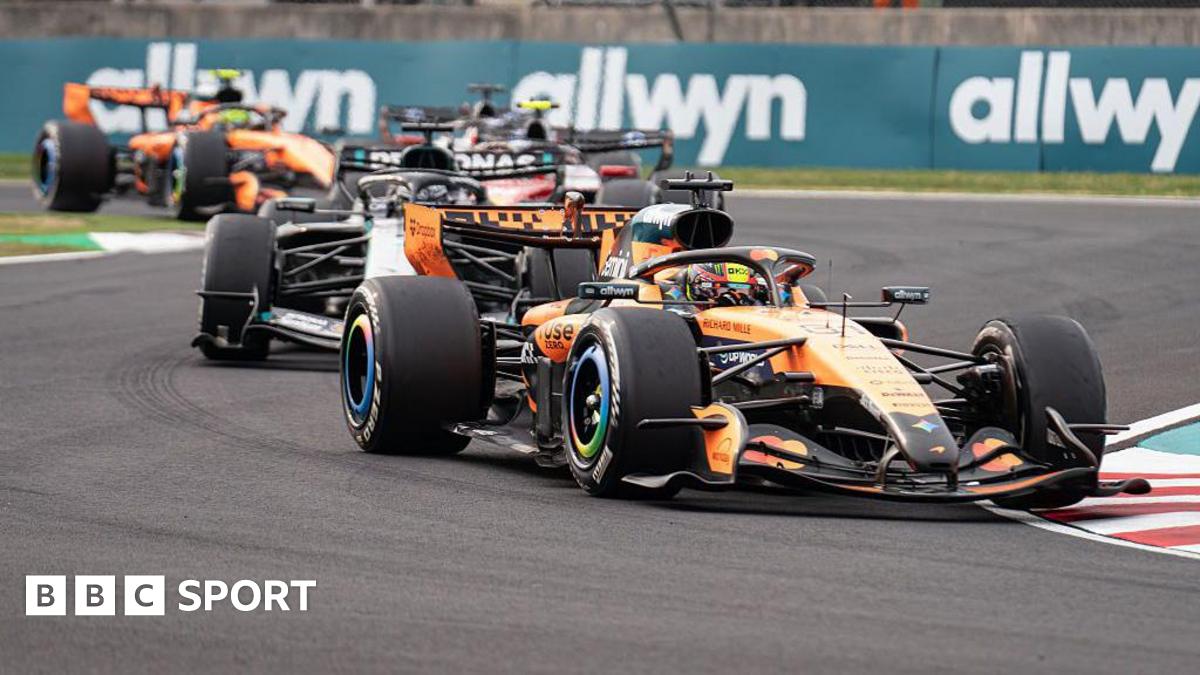
The in-race changes are mainly targeted at ensuring sudden speed differentials between cars in different deployment states do not become dangerous.
This was a key contributing factor in the high-speed crash involving Haas driver Oliver Bearman in the Japanese Grand Prix, as the Briton avoided the Alpine of Franco Colapinto after the Argentine drifted off line to discourage a passing attempt.
The maximum power of the “boost” mode will be capped at 150kw, or the car’s existing deployment level, if that is higher.
Cars will be allowed to deploy the full 350kw (470bhp) of electrical power in acceleration zones out of corners, but will be limited to 250kw at other parts of the lap.
This means that in areas defined as “straight-line mode” zones, where the front and rear wings are open to increase speed, power will be at 350kw, but elsewhere maximum deployment will not be allowed.
This would mean, for example, that Bearman would have been able to deploy at only 250kw rather than the 350kw he was using in his incident.
An FIA statement said: “These measures are designed to reduce excessive closing speeds while maintaining overtaking opportunities and overall performance characteristics.”