








Over the last seven weeks, the stock market has taken investors on quite the ride. On the one hand, we’ve witnessed the widely followed Dow Jones Industrial Average (^DJI +1.79%) and innovation-propelled Nasdaq Composite (^IXIC +1.52%) both briefly dip into correction territory, with the broad-based S&P 500 (^GSPC +1.20%) a stone’s throw from joining them. But we’ve also seen a rip-roaring rally erase most of these losses in a matter of two weeks.
Although optimists appear to have a tight grip on Wall Street’s reins, the stock market’s vigorous bounce from its recent lows may prove fleeting.
While nothing is set in stone and history can’t predict the future with certainty, a potential worst-case scenario is setting up for Wall Street on May 15, courtesy of a historic change at the Federal Reserve.
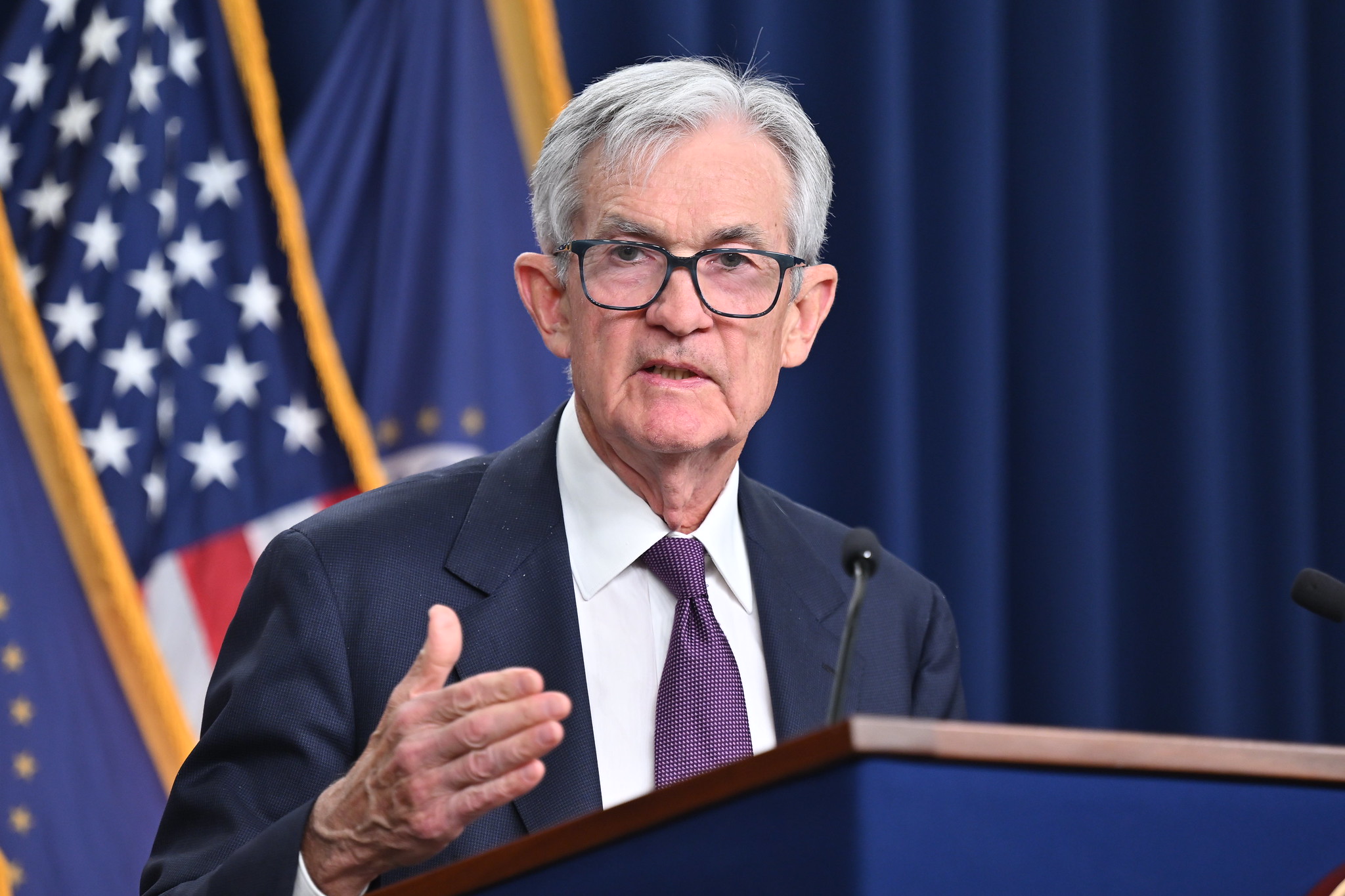
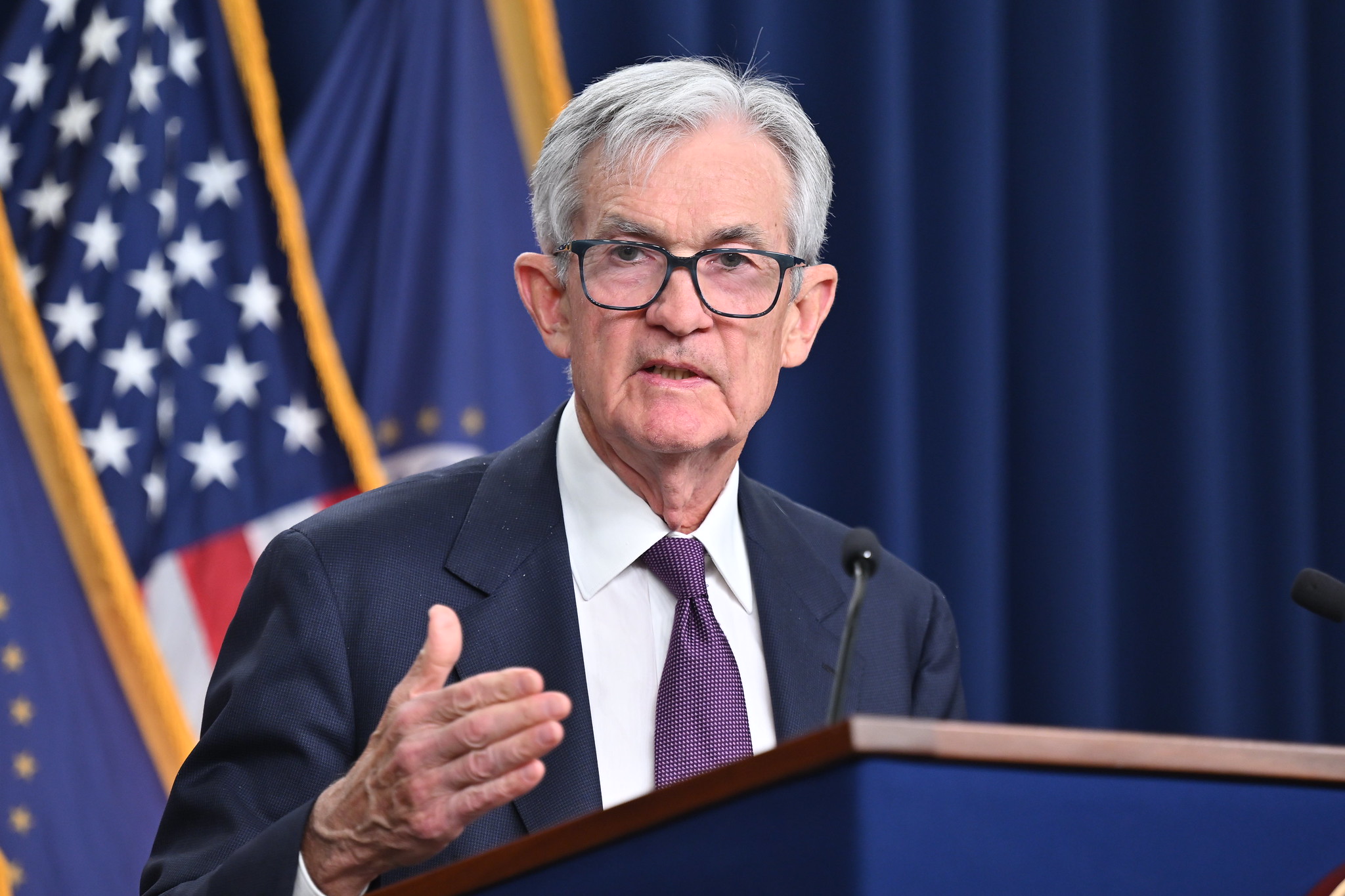
Jerome Powell’s term as Fed chair ends on May 15. Image source: Official Federal Reserve Photo.
The Kevin Warsh era is expected to begin in less than four weeks
Friday, May 15, marks the final day of Jerome Powell’s second term as Fed chair. Given how vocally President Donald Trump and Powell have feuded over interest rates over the last year, it’s no surprise that the president isn’t nominating Powell for a third term.
On Jan. 30, Trump officially nominated Kevin Warsh to succeed Jerome Powell as Fed chair. Assuming Warsh receives the requisite votes from the Senate Banking Committee and U.S. Senate, he’ll become the Federal Reserve’s 17th chairperson and bring experience to the position.
Warsh previously served on the Board of Governors of the Federal Reserve from Feb. 24, 2006, to March 31, 2011, and was a voting member of the Federal Open Market Committee (FOMC). The FOMC is a 12-person body, including the Fed chair, responsible for setting the nation’s monetary policy.
While Kevin Warsh played a role in navigating the U.S. economy through the financial crisis, his voting record and vocal critiques of the central bank’s actions raise red flags for Wall Street.
“If Trump wants someone easy on inflation, he got the wrong guy in Kevin Warsh.”@AnnaEconomist pic.twitter.com/FGMfeSqHpU
— Daily Chartbook (@dailychartbook) January 31, 2026
For example, Warsh’s voting record and commentary while on the FOMC show that he placed greater emphasis on one aspect of the Fed’s dual mandate (stabilizing prices) than the other (maximizing employment). Even as the unemployment rate soared during the Great Recession, Warsh preferred higher interest rates to ensure that inflation didn’t pick up.
Warsh’s preference for keeping a lid on inflation labeled him a “hawk.” This is noteworthy, given that President Trump has been pressuring Powell and the FOMC to aggressively cut interest rates.
The other cause for concern is Warsh’s desire to deleverage the central bank’s balance sheet.
Between August 2008 and April 2022, the Fed’s balance sheet, comprised primarily of long-term Treasury bonds and mortgage-backed securities, ballooned from less than $900 billion to nearly $9 trillion. Although a quantitative tightening cycle lowered this figure to approximately $6.7 trillion (as of April 8, 2026), Trump’s nominated Fed chair would prefer the central bank to be a passive market participant. This would entail selling a significant portion of the Fed’s total assets.
However, bond prices and yields are inversely related. Potentially selling trillions of dollars in U.S. Treasury bonds would be expected to drive down their price and increase their yield, thereby boosting borrowing rates.

Image source: Getty Images.
Warsh’s ascent may coincide with a precarious moment for the stock market
But the voting record and balance sheet opinions of Kevin Warsh are only half of the story.
At the same time that investors are preparing to welcome a new Fed chair, the prevailing U.S. inflation rate has gone parabolic, courtesy of President Trump’s actions in Iran.
On Feb. 28, at Trump’s command, the U.S. military, along with Israel, commenced attacks on Iran. Not long after these military operations began, Iran closed the Strait of Hormuz to virtually all oil exports. This roughly seven-week shutdown (through this writing on April 14) represents the largest energy supply disruption in modern history. The Energy Information Administration notes that approximately 20% of the world’s liquid petroleum travels through the Strait of Hormuz daily.
When the supply of an in-demand good or service is constrained, the price of that good or service rises until demand tapers off. We’ve witnessed crude oil prices soar since the Iran war began, leading to the fastest increase in gas prices in more than three decades.
Price changes over last year (March CPI report)
Fuel Oil: +44.2%
Gasoline: +18.9%
Gas Utilities: +6.4%
Electricity: +4.6%
Transportation: +4.1%
Food away from home: +3.8%
Medical Care: +3.7%
Overall CPI: +3.3%
Shelter: +3%
Food at home: +1.9%
New Cars: +0.5%
Used Cars: -3.2%— Charlie Bilello (@charliebilello) April 10, 2026
Fueled by sky-high energy costs and the stickiness of Trump’s tariffs in the goods sector, trailing 12-month (TTM) U.S. inflation jumped 90 basis points in March to 3.3%. U.S. inflation has topped the Fed’s long-term target of 2% for five consecutive years.
Unfortunately, energy price shocks are historically not one-month issues. According to the Federal Reserve Bank of Cleveland’s Inflation Nowcasting tool, TTM inflation for April is estimated to climb by another 28 basis points to 3.58%.
When the stock market began the year at its second-priciest valuation since January 1871, investors believed the FOMC would cut rates multiple times in 2026. But with TTM inflation jumping from a reported 2.4% in February to an estimated 3.58% in April, there’s no catalyst for a rate cut. In fact, there’s a strong argument to be made that the FOMC could increase rates before the year ends.
Now, let’s connect the dots.
Kevin Warsh, a historic FOMC hawk, is expected to take over as Fed chair right as inflation turns dramatically upward. An expensive stock market that had been pricing in several rate cuts may be facing a worst-case scenario on May 15.