








This has been a historic month for Wall Street in more ways than one. In addition to the Dow Jones Industrial Average (^DJI +0.72%), S&P 500 (^GSPC +0.22%), and Nasdaq Composite (^IXIC +0.20%) closing at record highs on May 28, we’ve witnessed a rare changing of the guard at America’s foremost financial institution, the Federal Reserve.
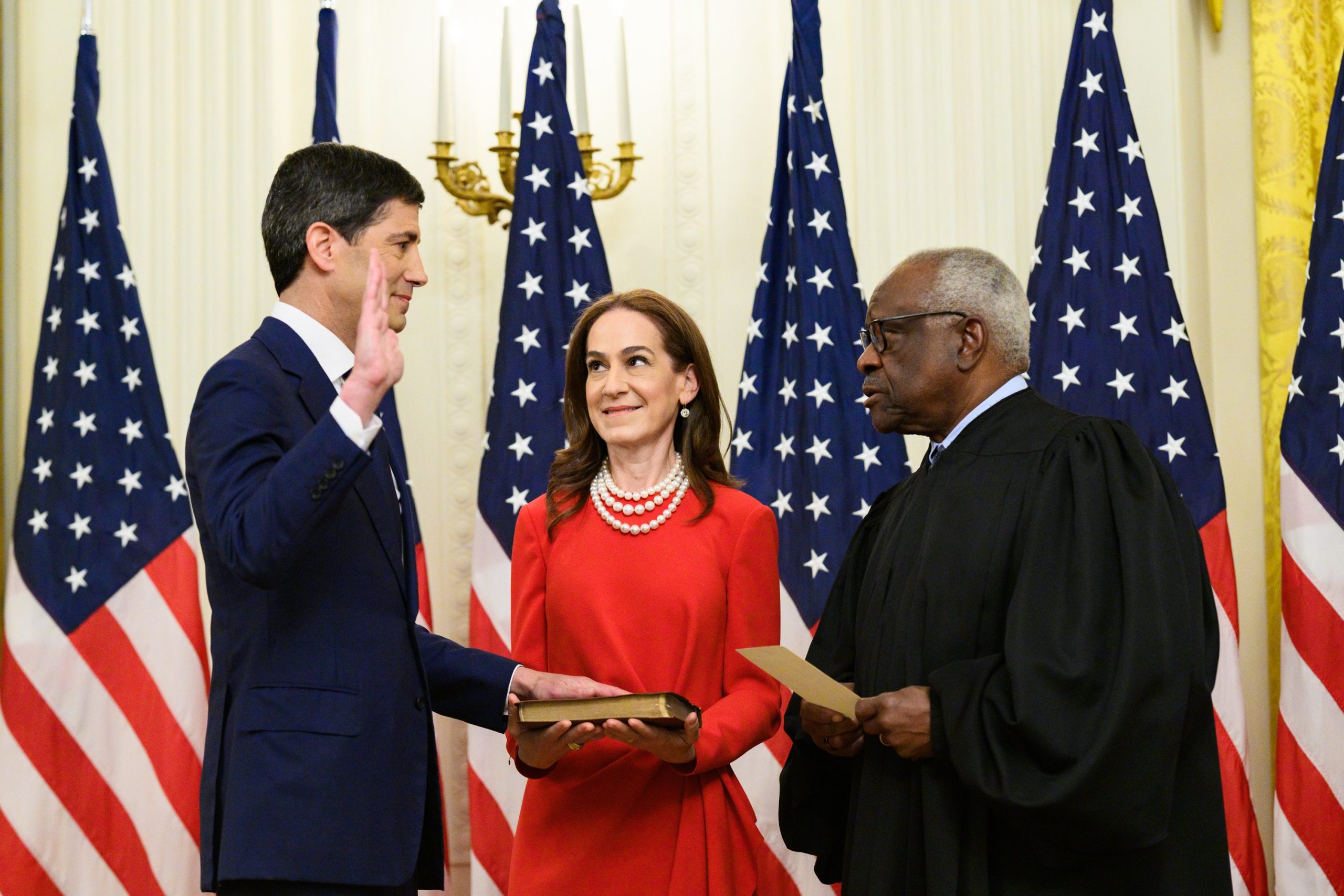
May 15 marked the final day of Jerome Powell’s second term as Fed chair, paving the way for President Donald Trump’s handpicked nominee, Kevin Warsh, to grab the reins. On May 22, Warsh was officially sworn in as only the 17th head of the Fed since its creation in December 1913.
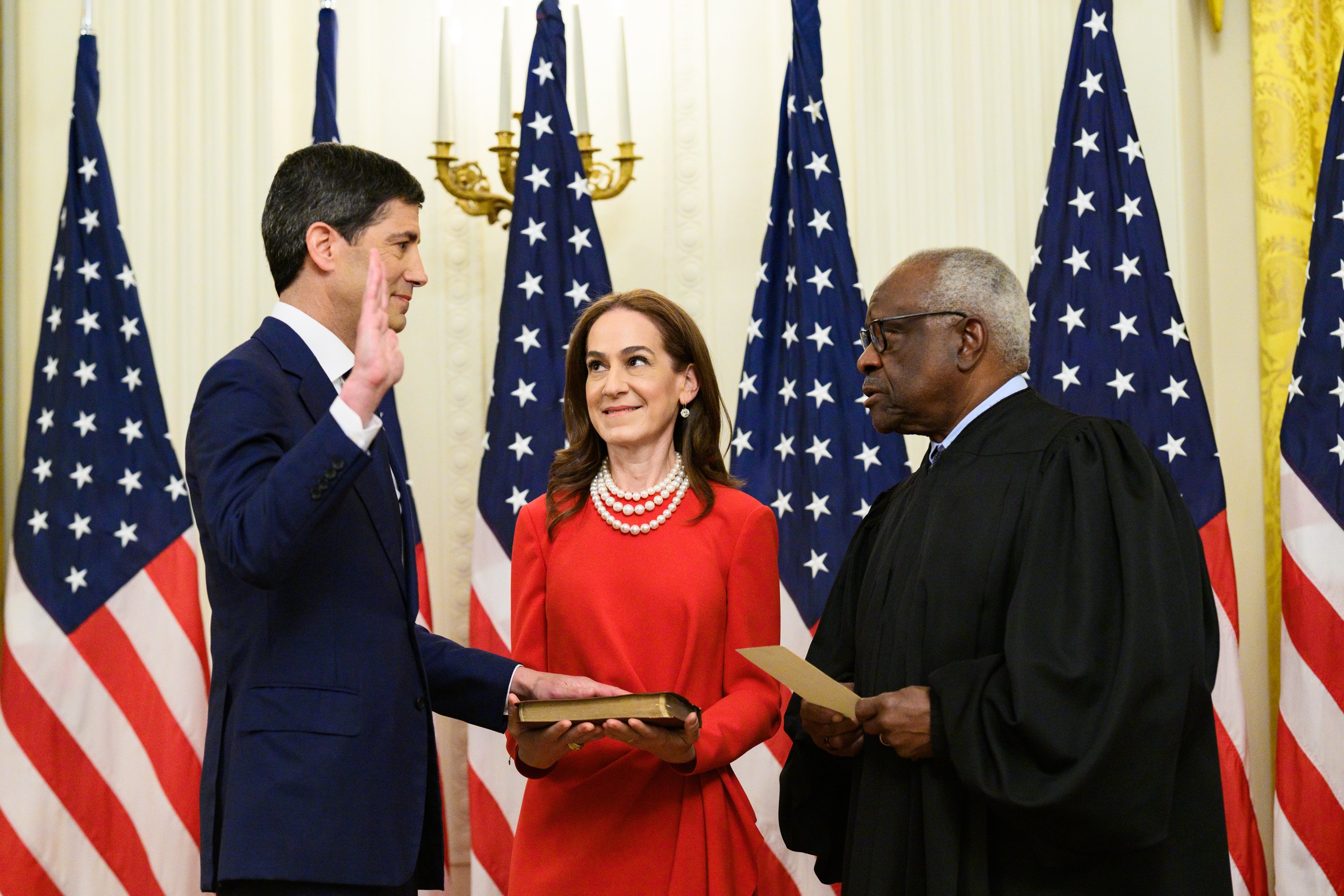
Fed Chair Kevin Warsh being sworn in by Justice Clarence Thomas. Image source: Official White House Photo by Daniel Torok.
Warsh brings more than five years of experience to the position, having previously served on the Board of Governors and as a voting member of the Federal Open Market Committee (FOMC) from Feb. 24, 2006, to March 31, 2011. But experience isn’t everything when it comes to pleasing Wall Street.
The new Fed chair has been outspoken about his desire to reform the central bank. He’s laid out three proposals that, if enacted, can have dire consequences for Wall Street.
1. Kevin Warsh wants to slash the Fed’s bloated balance sheet
Among the several changes proposed by Warsh before being sworn in, perhaps none looms larger than his desire to “get out of the fiscal business.”
Specifically, the new head of the Fed has been critical of his predecessors allowing the central bank to be an active market participant well beyond a crisis event (e.g., the financial crisis). Between August 2008 and March 2022, the Federal Reserve’s balance sheet, composed primarily of long-term Treasury bonds and mortgage-backed securities (MBS), grew approximately tenfold to nearly $9 trillion. Following a period of quantitative tightening, this balance sheet currently stands at a shade over $6.7 trillion.
Kevin Warsh Nomination: one reason why market players are interpreting it as a hawkish pick- I agree-is because of his views on the need for a radical balance sheet reduction.
The $31 trillion-dollar American economy demands liquidity & financing needs that are larger than what… pic.twitter.com/zYunGAItV8
— Joseph Brusuelas (@joebrusuelas) January 30, 2026
Warsh would prefer the central bank to be a passive observer rather than actively influence markets through its bond and MBS purchases. But to “get out of the fiscal business,” the Fed would have to sell most of its balance sheet assets — and this comes with potentially serious consequences for Wall Street.
Since bond prices and yields are inversely related, selling trillions worth of long-term Treasury bonds would almost certainly depress prices, raise yields, and increase borrowing costs. In other words, even if the FOMC, hypothetically, didn’t change its easing bias statement and left the federal funds target rate unchanged, reforming the central bank’s balance sheet would equate to one or more rate hikes by making borrowing costlier.
This would be a double whammy for the stock market. Higher lending rates could slow the debt financing that’s fueled the artificial intelligence data center build-out. Additionally, yields on fixed-income securities would rise, possibly encouraging some investors to sell stocks and invest in safer assets, such as bonds and certificates of deposit.

Image source: Getty Images.
2. He wants to change the way you think about inflation
Secondly, Kevin Warsh wants to completely reshape how the Fed and investors think about inflation.
In January 2012, the FOMC established the 2% long-term inflation target as something of a gold standard for the central bank to gauge its success or failure in stabilizing prices. The new Fed chief wants to do away with this hard target in favor of something simpler… and a whole lot vaguer.
While speaking before the Senate Banking Committee in April 2026, Warsh offered what he called an “old-fashioned” definition of inflation that he’d prefer the central bank use:
I believe that price stability should be a change in prices such that no one’s talking about it.
Redefining inflation to simply be something that people are talking about would give the FOMC far more flexibility to adjust its rate-easing/neutral/hiking bias, and to take action (i.e., adjusting the federal funds target rate and/or conducting open market operations).
US inflation is red hot.
1. CPI Inflation: 3.8%, highest since May 2023
2. PCE Inflation: 3.8%, highest since May 2023
3. PPI Inflation: 6%, highest since March 2023
4. Services Inflation: 3.4%, highest since Sept 2025
5. Shelter Inflation: 3.3%, highest since Sept 2025
6…. pic.twitter.com/u8kaSN54G3— The Kobeissi Letter (@KobeissiLetter) May 28, 2026
At the moment, Americans are definitely talking about inflation. Rapidly rising energy prices caused by the Iran war have made it impossible to sweep inflation under the rug. On top of higher fuel prices, the lagging effects of inflation on businesses should soon show up in economic data, further increasing prices.
Wall Street craves certainty from the central bank. Removing the hardline 2% long-term target for something that’s considerably more subjective is unlikely to please a historically expensive stock market that’s already contending with the prospect of rate hikes as inflation rises.
3. Say goodbye to forward-looking FOMC guidance
The third and final way Warsh aims to mold the Federal Reserve under his watch is by ditching forward-looking FOMC guidance, such as the dot plot.
The dot plot is published quarterly and shows (anonymously) where FOMC policymakers expect interest rates will be in the coming years. The dot plot has traditionally helped investors estimate how many rate cuts or hikes to expect in a given year.
March Dot Plot pic.twitter.com/IYLoeIdeEC
— FinancialJuice (@financialjuice) March 18, 2026
Similar to reshaping how we think about inflation, Jerome Powell’s successor wants to loosen the proverbial belt that comes with forward guidance and provide the FOMC with the flexibility to adjust its monetary policy.
Additionally, Warsh has opined that forward-looking guidance can lead to confirmation bias from policymakers. Specifically, FOMC members may stay within the boundaries of their long-term rate outlook too long. This can be detrimental to the Fed’s mission of maximum employment and price stability.
Saying goodbye to most forward guidance would also reinforce Warsh’s desire for the central bank to take a back seat as a passive observer rather than an active participant.
Although reducing forward-looking guidance can increase FOMC policy flexibility, it could ultimately increase stock market volatility by taking away the predictability that investors hold dear. Furthermore, less transparency means it’ll be considerably harder to hold the central bank accountable for its actions.
Regardless of whether you believe these are the right or wrong moves for Fed Chair Kevin Warsh to take, they can collectively decimate Wall Street.