








Fortinet: Steadily Growing Revenue
Fortinet (FTNT +3.49%) primarily generates revenue by selling network security hardware, software licenses, and ongoing subscription services to diverse global enterprises.
While introducing new enterprise firewall hardware and facing some shareholder investigations, it reported an approximately 29% net income margin for the quarter ended March 31, 2026.
Palo Alto Networks: Maintaining the Revenue Lead
Palo Alto Networks (PANW +3.17%) provides advanced firewall appliances and cloud-based cybersecurity subscription services to large businesses and government entities around the world.
It recently finalized multiple corporate acquisitions and addressed critical software vulnerabilities, and it generated an approximately 17% net income margin for the quarter ended Jan. 31, 2026.
Why Revenue Matters for Retail Investors
Revenue helps individual investors clearly understand the total sales a business generates before any operating expenses are subtracted. It enables investors to gauge raw business scale and growth.
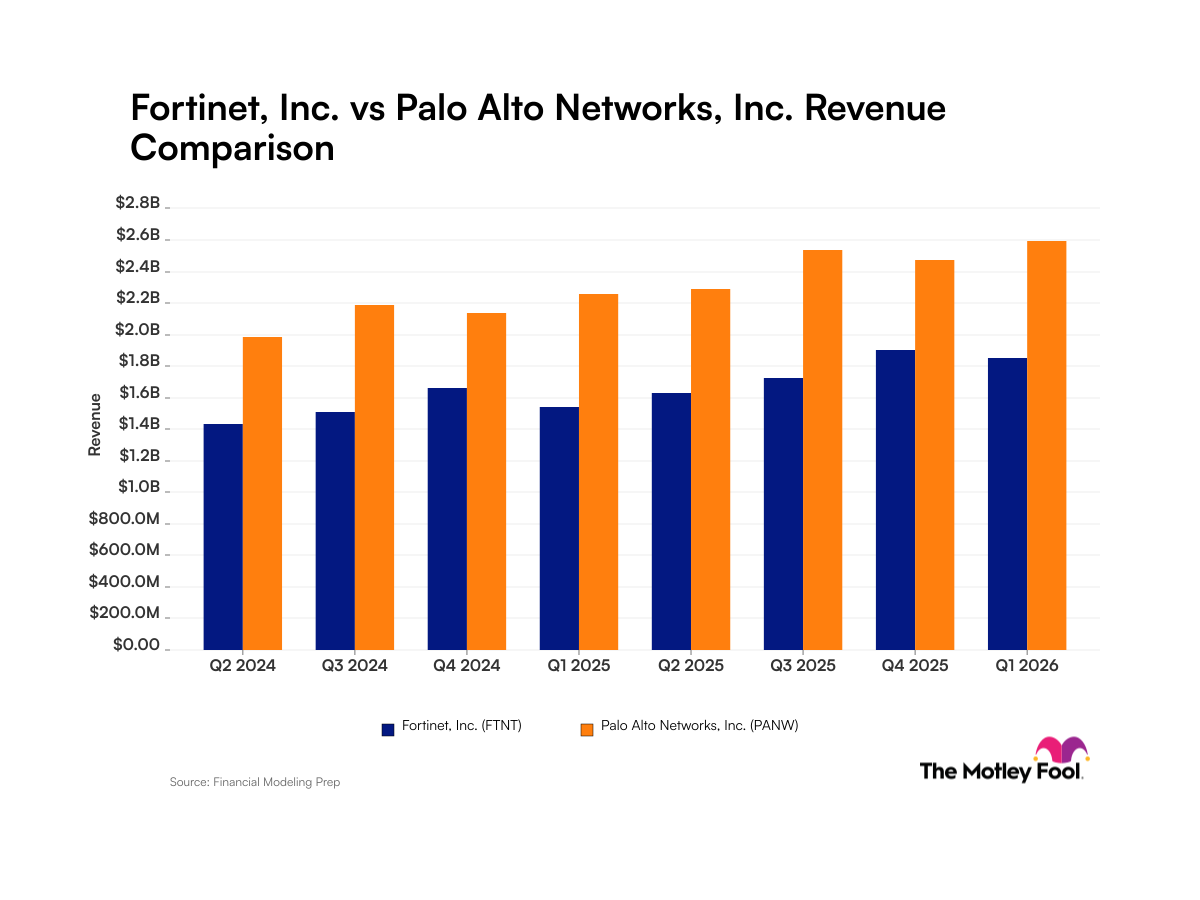
Image source: The Motley Fool.
Quarterly Revenue for Fortinet and Palo Alto Networks
| Quarter (Period End) | Fortinet Revenue | Palo Alto Networks Revenue |
|---|---|---|
| Q2 2024 | $1.4 billion (period ended June 2024) | $2.0 billion (period ended April 2024) |
| Q3 2024 | $1.5 billion (period ended Sept. 2024) | $2.2 billion (period ended July 2024) |
| Q4 2024 | $1.7 billion (period ended Dec. 2024) | $2.1 billion (period ended Oct. 2024) |
| Q1 2025 | $1.5 billion (period ended March 2025) | $2.3 billion (period ended Jan. 2025) |
| Q2 2025 | $1.6 billion (period ended June 2025) | $2.3 billion (period ended April 2025) |
| Q3 2025 | $1.7 billion (period ended Sept. 2025) | $2.5 billion (period ended July 2025) |
| Q4 2025 | $1.9 billion (period ended Dec. 2025) | $2.5 billion (period ended Oct. 2025) |
| Q1 2026 | $1.8 billion (period ended March 2026) | $2.6 billion (period ended Jan. 2026) |
Data source: Company filings. Data as of May 19, 2026.
Foolish Take
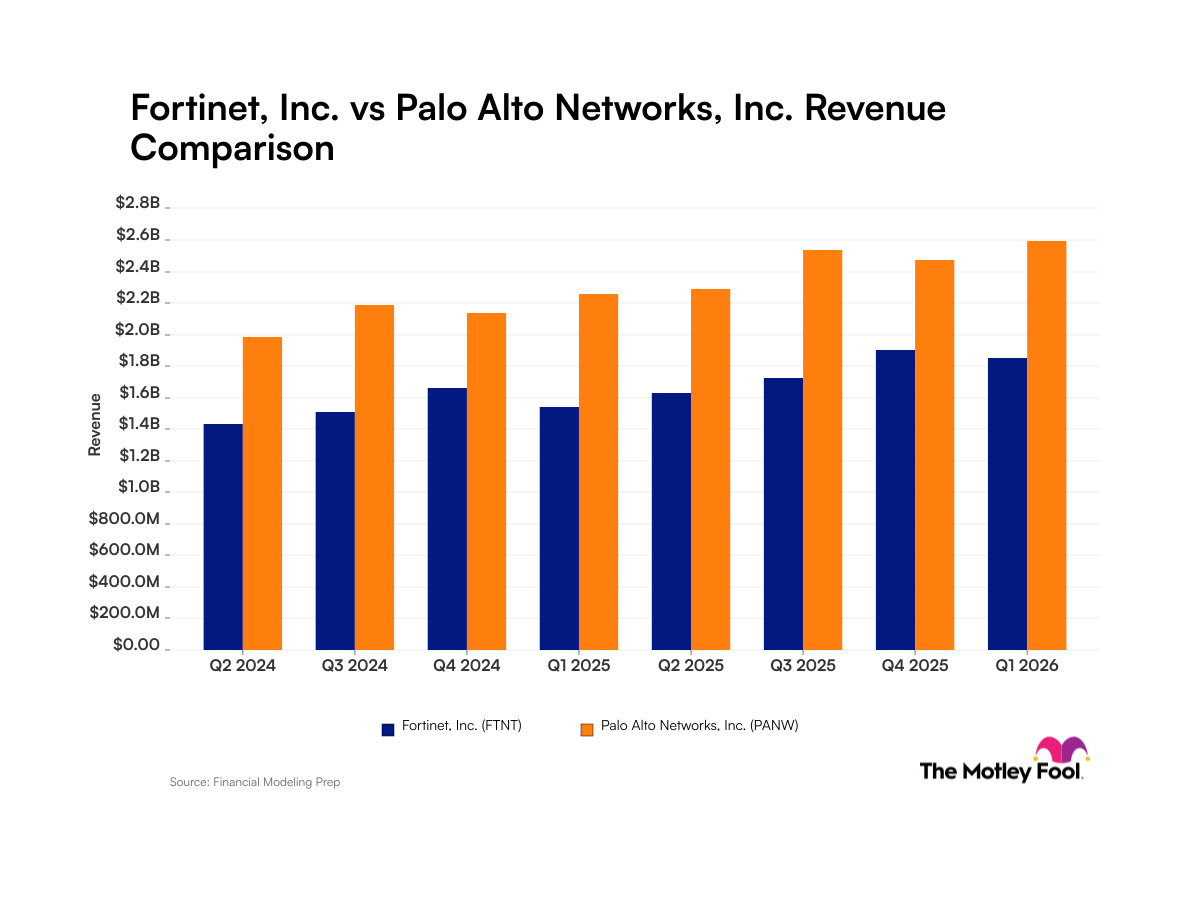
As the revenue numbers reveal, Palo Alto Networks is the larger cybersecurity company compared to Fortinet. Even so, Fortinet’s business is growing faster, as demonstrated by its first quarter revenue of $1.8 billion, which represents a 20% year-over-year increase. Its cybersecurity rival experienced 15% year-over-year growth to $2.6 billion in its fiscal second quarter ended Jan. 31.
Since both companies experienced excellent sales growth in their latest quarterly results, their stock prices have soared. Fortinet shares hit a 52-week high of $134.19 on May 22 while Palo Alto Networks stock reached a high of $261.41 that same day.
This is a dramatic reversal from the first quarter, when Wall Street became fearful artificial intelligence would take away business from cybersecurity companies, which led to a sell-off across the sector. As one of the bigger enterprises in the industry, Palo Alto Networks stock slumped to a 52-week low of $139.57 on Feb. 24.
In Q2, investors have come to realize those Q1 fears were overblown. In fact, the AI era means cybersecurity is more important, not less. As organizations become reliant on AI, hackers can more easily disrupt operations without the likes of Palo Alto Networks and Fortinet to protect them. Their outstanding year-over-year revenue growth illustrates customer demand remains strong in the cybersecurity sector.
Robert Izquierdo has positions in Palo Alto Networks. The Motley Fool has positions in and recommends Fortinet. The Motley Fool recommends Palo Alto Networks. The Motley Fool has a disclosure policy.