








A new era is upon us at the Federal Reserve, and it’s ushering in a period of heightened uncertainty for Wall Street and its major stock indexes, the Dow Jones Industrial Average (^DJI +0.58%), S&P 500 (^GSPC +0.37%), and Nasdaq Composite (^IXIC +0.19%).
After a contentious final year in which President Donald Trump and Fed Chair Jerome Powell regularly feuded over interest rates, Powell’s term as head of the Fed came to a close on May 15. Succeeding him is Kevin Warsh, a former member of the Board of Governors of the Federal Reserve (Feb. 24, 2006 – March 31, 2011), who played an instrumental role in navigating the U.S. economy through the financial crisis.
Though Powell is staying on the Board of Governors and intends to keep a low profile with Warsh steering the ship, he ended his eight-year tenure as Fed chair with a bang. In his final Federal Open Market Committee (FOMC) press conference on April 29, Powell delivered a 20-word reality check on inflation that Wall Street and investors may not appreciate but have to respect.
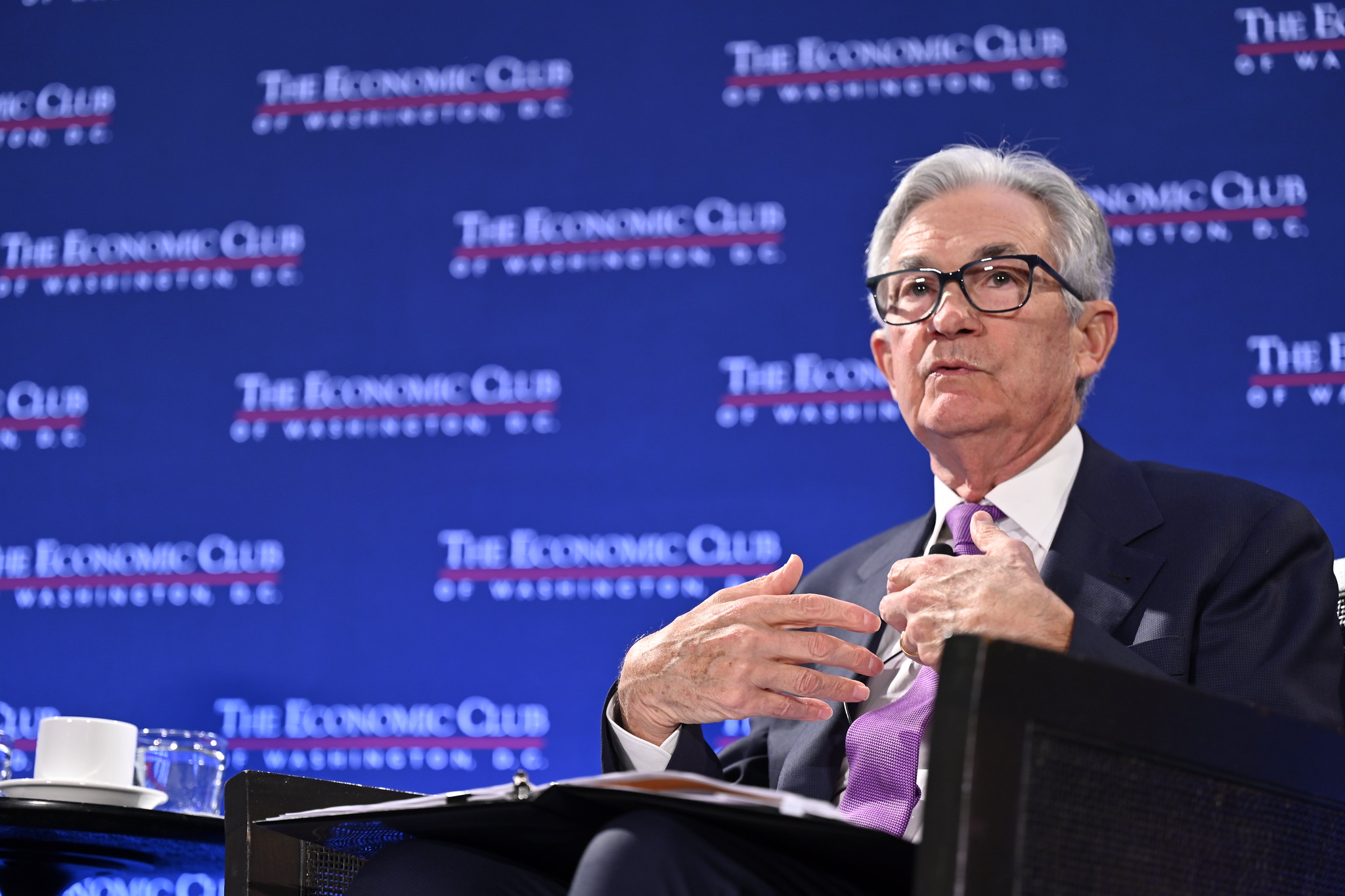
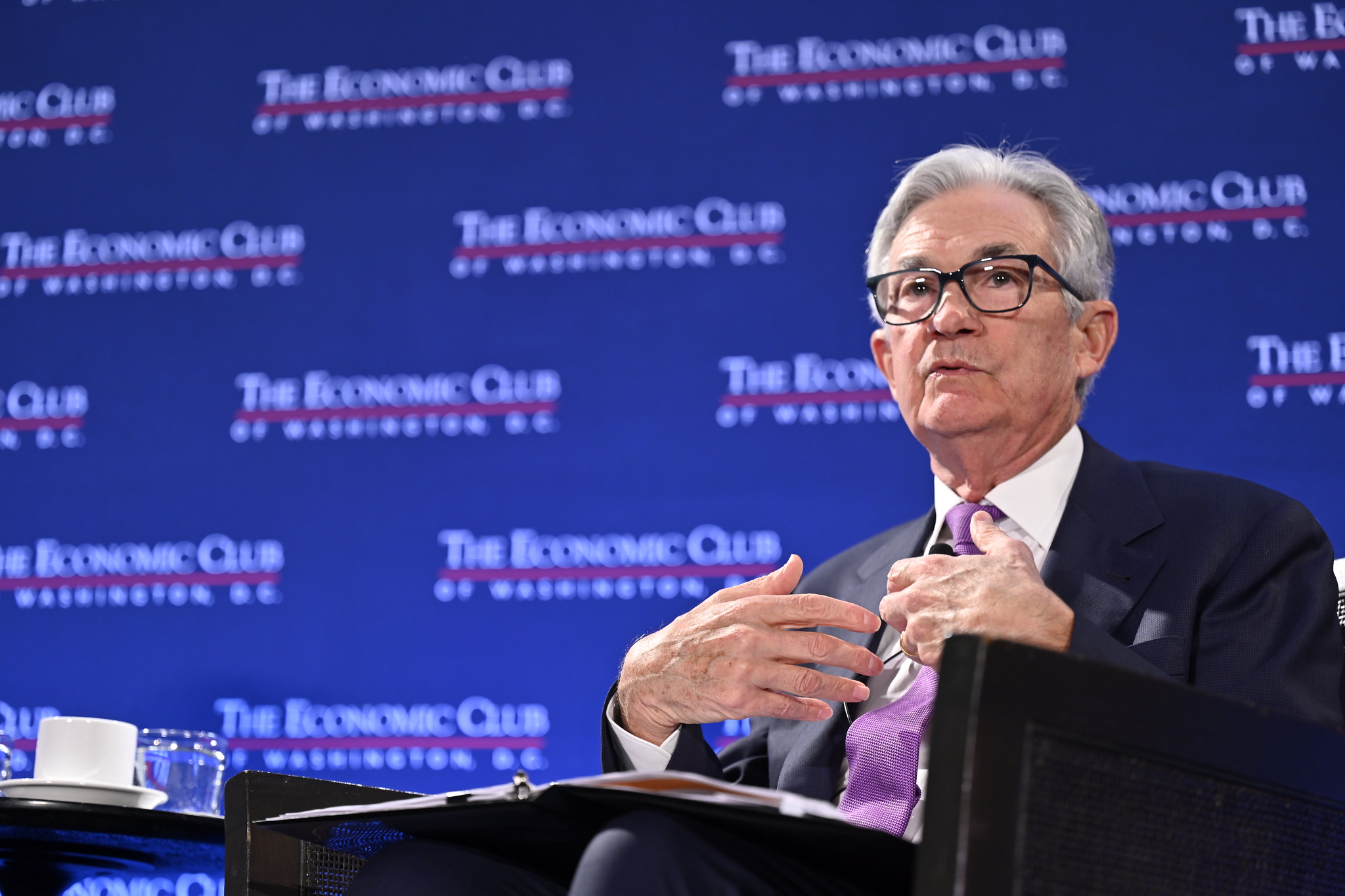
Former Fed Chair Jerome Powell delivering remarks. Image source: Official Federal Reserve Photo.
Powell’s final year as Fed chair was marred by two price shocks
Since early April 2025, the FOMC — the 12-person body responsible for setting the nation’s monetary policy — has dealt with two separate price shocks.
The first was President Trump’s “Liberation Day” tariff and trade policy announcements. Although the bulk of the global and reciprocal tariffs introduced by the president were deemed invalid by the U.S. Supreme Court in February 2026, the price stickiness of the president’s tariffs continues to affect the goods sector.
The second price shock can be traced to the Iran war. Not long after the U.S. and Israel commenced attacks on Iran on Feb. 28, the latter closed the Strait of Hormuz to most commercial vessels. This has created the largest energy supply disruption in history, stymying the movement of approximately 20 million barrels of petroleum liquids per day.
⛽ Average U.S. gas prices per gallon on May 6, per AAA:
• Regular: $4.54 (⬆️ $1.56 since war in Iran began on Feb. 28)
• Premium: $5.39 (⬆️ $1.85 since war began)
• Diesel: $5.67 (⬆️ $1.81 since war began)
— NBC News (@NBCNews) May 6, 2026
The impact of this supply disruption has been readily apparent. Gas prices have soared at the fastest pace in over 30 years, while diesel prices are up by a steeper percentage.
History also tells us that the adverse effects of energy price shocks lag for businesses by a couple of months. Once higher transportation and production costs are factored into economic data, the U.S. inflation rate can rise further.
In February, before the impacts of the Iran war began showing up in economic data, trailing 12-month (TTM) inflation was 2.4%. In April, TTM inflation clocked in at 3.8%, driven primarily by higher energy prices.

Image source: Getty Images.
Jerome Powell tells the unpleasant truth about inflation and interest rates
When this year began, investors were pricing in several FOMC rate cuts. Lower interest rates were expected to fuel the artificial intelligence data center build-out by making it cheaper for companies to borrow capital. But two separate price shocks have effectively removed rate cuts from the table in 2026.
Nevertheless, the FOMC maintained its easing bias in its April meeting statement, which is spurring questions from economists, investors, and reporters about how the central bank will approach inflation and interest rates going forward.
Historically, the FOMC tends to look past energy price shocks and not overreact since they’re often short-lived. But in response to a question about how the inflation outlook is evolving from The Wall Street Journal‘s chief economics correspondent, Nick Timiraos, now-former Fed Chair Powell offered a painful 20-word admission for Wall Street:
The question about looking through energy really is not in front of us right now. It hasn’t even peaked yet.
While President Trump expects the inflationary impact of the Iran war to be a short-term issue, Powell and other members of the FOMC recognize that the inflationary peak from this historic supply disruption hasn’t yet occurred.
BREAKING: April PPI Inflation surges to 6%, well above expectations of 4.9% and the highest level since January 2023.
Core PPI Inflation rose to 5.2%, above expectations of 4.3%.
Both CPI and PPI Inflation are now officially at 3+ year highs.
Odds of rate HIKES are rising.
— The Kobeissi Letter (@KobeissiLetter) May 13, 2026
According to the Federal Reserve Bank of Cleveland’s Inflation Nowcasting tool, which factors in newly reported economic data to provide a current estimate of TTM inflation, prices are expected to keep climbing. The Cleveland Fed’s May estimate calls for a 38-basis-point increase from April to 4.18%. It’s worth noting that the Inflation Nowcasting tool has slightly underestimated reported inflation in each of the previous two months.
The unpleasant reality of inflation is that things could get much worse for consumers, businesses, and Wall Street in the coming months. Given the uncertainties surrounding the timeline of the Iran war and when the Strait of Hormuz might fully reopen, the FOMC may be left with little choice but to shift to a neutral or hiking bias in the not-too-distant future.
The possible combination of rate hikes with a historically expensive stock market isn’t ideal. Without lower lending rates as a buffer, the Dow Jones Industrial Average, S&P 500, and Nasdaq Composite are vulnerable to significant volatility and downside.
Though Powell’s time as Fed chair is over, his reality check on inflation will live on for several months, if not quarters, to come.