









At the time of this writing, there’s optimism that the U.S. and Iran may agree on a way to reopen the Strait of Hormuz, the vital waterway that normally carries about 20% of the world’s oil. However, oil prices remain elevated, and although stock markets have largely shaken off conflict-related concerns, the full effect of the blockage has yet to play out.
For crypto, high energy costs affect Bitcoin (BTC +0.48%) mining operations. More importantly, Bitcoin’s price is sensitive to changes in inflation and consumer sentiment, both of which suffer when oil prices are high.

Image source: Getty Images.
Oil prices will remain high for some time
At the start of the year, a barrel of WTI crude oil cost around $60. In April, prices spiked to almost $113 before falling to $95 today. Unfortunately, even if the Strait reopens tomorrow, damaged infrastructure, depleted reserves, and shipping lags all mean it could take months (or more) for things to normalize.
People are already feeling the pinch. Inflation hit 3.3% in March, largely driven by high energy costs. Average gasoline prices just topped $4.50 a gallon, up from $3.15 a year ago. We haven’t yet seen the bleed into the costs of petrochemical-based products like plastics, medicine, and more.
Against that backdrop, it’s surprising that major U.S. indexes have set a string of new highs in recent weeks, though optimism about artificial intelligence (AI) and chipmaking drove much of the increase. Bitcoin has erased some of this year’s losses and finally retook the $80,000 mark. However, at the risk of sounding like a party pooper, I don’t think it can hold those gains in the short term.

Today’s Change
(0.48%) $383.52
Current Price
$80758.00
Key Data Points
Market Cap
$1.6T
Day’s Range
$80155.00 – $81023.00
52wk Range
$60255.56 – $126079.89
Volume
19B
What high oil prices mean for Bitcoin
Bitcoin is being buffeted by two contradictory forces right now: tech optimism versus inflation. Bitcoin usually suffers when inflation is high, as elevated living costs mean there’s less cash available for crypto investing. Plus, the Federal Reserve’s go-to method for reducing inflation is to maintain, or even raise, interest rates. High interest rates mean that safer investments, such as Treasury bonds, offer solid yields, reducing Bitcoin’s appeal.
On the other hand, Bitcoin’s performance has much in common with tech stocks, many of which are soaring. Its price closely matches a software-focused exchange-traded fund (ETF), the iShares Expanded Tech-Software Sector ETF. The correlation is striking and may result from markets viewing both as risk-on assets or from the belief that they are affected by similar economic factors.
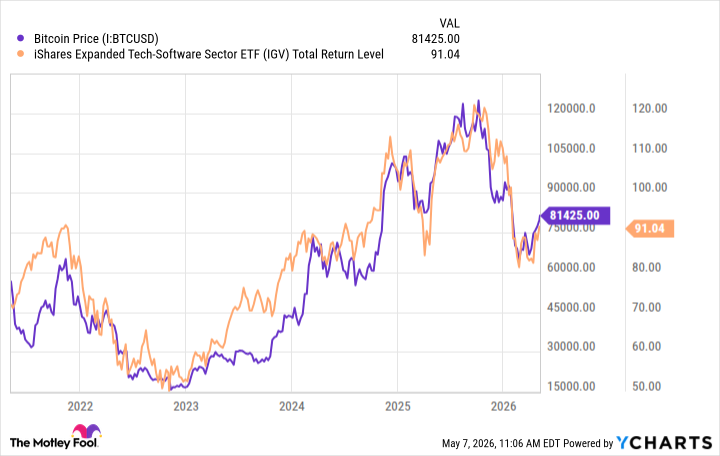
Bitcoin Price data by YCharts.
Crypto investing in turbulent times
Bitcoin’s extreme volatility can be unsettling, especially when you’re trying to decide whether to invest. Dollar-cost averaging — buying smaller amounts at regular intervals, rather than spending a lump sum — can help. It stops investors from waiting for a perfect entry point that never comes, and evens out some of the extreme price swings.
It is also important to maintain a long-term perspective and ensure that crypto accounts for only a small part of a balanced portfolio. Diversification is one of the best weapons investors have against geopolitical uncertainty.
Looking ahead to the coming decade, the picture for Bitcoin has never been brighter. Institutional investment remains strong, reinforcing Bitcoin’s legitimacy and reducing volatility. Moreover, regulatory clarity is on the way, albeit at a slower pace than some investors may hope, and blockchain adoption is increasing.